2026 Best Integrated Solar Battery Lifespan?

Time:2026-11-14 Author:Sienna
0%

A solar battery can keep lights on after sunset, but its service life is not a single fixed number. If you are asking “what is the lifespan of an integrated solar battery,” the honest answer depends on its chemistry, operating conditions, and the manufacturer’s specifications. Many home batteries are designed for roughly 10 to 15 years, but that estimate is not a promise. Some may reach their cycle limit sooner; others may remain useful beyond their warranty period with reduced capacity.

The details matter. Battery datasheets often list both a cycle rating and a warranty, and these measure different things. A system might be warranted for a stated number of years or energy throughput, while its usable storage gradually declines. Frequent deep discharges, high temperatures, poor ventilation, and mismatched system sizing can contribute to faster wear. Picture a battery cabinet in a hot garage, cycling heavily through summer: its conditions differ from a shaded, temperature-controlled installation. Small differences add up.

Check the chemistry, expected cycles, usable capacity, warranty terms, and local installation guidance before comparing models. Ask whether the quoted lifespan describes the battery cells, the integrated unit, or the complete system; inverters and controls may need attention on a different schedule. Manufacturer claims are useful, but they rely on specified conditions. Real homes are messier. That uncertainty deserves a place in any buying decision, not a footnote.
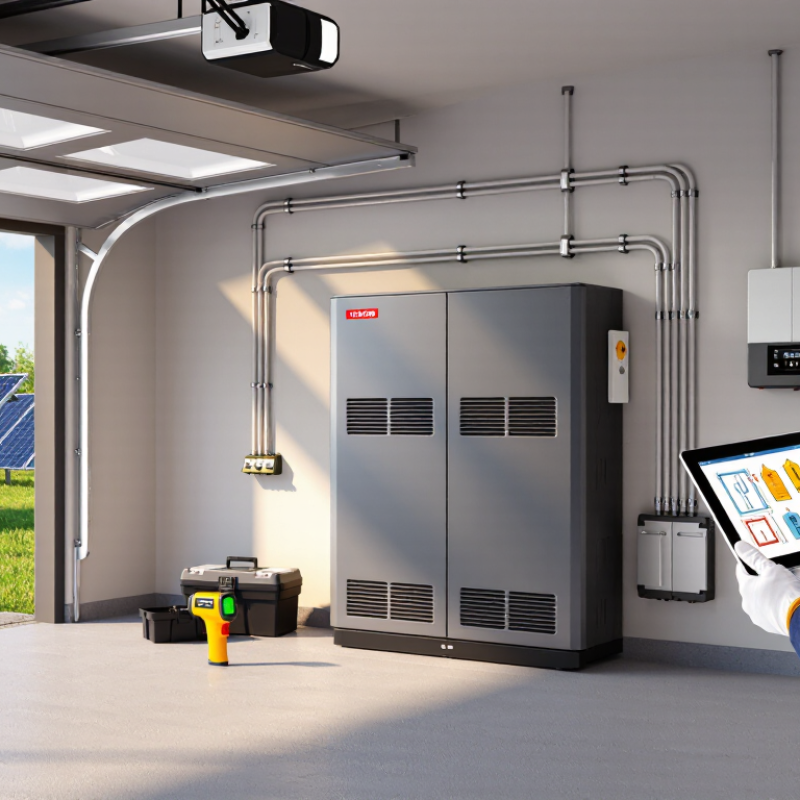
2026 Best Integrated Solar Battery Lifespan?

What Is an Integrated Solar Battery?

An integrated solar battery is a home energy storage system designed to work as one coordinated unit with solar panels. Depending on the design, its cabinet may contain battery cells, a battery management system, and power-conversion equipment. These components store surplus daytime electricity and make it available after sunset or during a grid outage. That is the appeal.

The word “integrated” does not always mean every component sits inside one box. Some systems connect a separate inverter or control unit, so check the equipment layout before comparing models. A compact setup can save wall space and simplify monitoring, but it may be harder to expand later. Not quite plug-and-play.

Battery lifespan depends on chemistry, operating temperature, charge cycles, and how deeply the battery is discharged. Frequent cycling in a hot, poorly ventilated garage can contribute to faster wear. Many residential lithium batteries are designed for around a decade or longer, but actual performance varies. Check the product’s cycle rating, capacity-retention terms, and warranty conditions. Those details matter more than a single lifespan number. A careful installer can also assess ventilation, electrical compatibility, and your household’s evening energy use. I would not assume the largest capacity is automatically the best fit.

How Is Solar Battery Lifespan Measured?

Solar battery lifespan is measured in cycles, calendar age, and remaining capacity. One cycle represents an equivalent full charge and discharge, not necessarily one day. Using half the battery’s usable energy twice is roughly one full cycle. Simple enough.

Cycle-life testing tracks how many cycles a battery completes before its capacity drops to a specified level. That threshold and the test conditions vary. A figure such as 80% capacity is a reference point, not a universal end-of-life rule. Some batteries may still serve a household after that point, though they store less energy.

Calendar aging matters too. Cells gradually lose capacity over time, even with light use. Heat, frequent deep discharges, and long periods at a high charge can speed that decline. A battery monitor may estimate state of health, while energy records show how much power the system actually delivers. Neither reading tells the whole story. Check usable capacity, total energy throughput, and warranty limits together. For example, compare the battery’s measured output on a mild evening with its original usable capacity. The result can be imperfect; household loads and weather change from day to day. That’s worth remembering.

2026 Best Integrated Solar Battery Lifespan? - How Is Solar Battery Lifespan Measured?

Measurement What It Means Typical Reference Point How to Interpret It
Cycle life The number of charge-and-discharge cycles a battery completes before its usable capacity falls to a specified level. Lithium iron phosphate (LFP) batteries are commonly specified for roughly 3,000–6,000 cycles to about 80% capacity, depending on design and test conditions. Check the stated capacity-retention threshold and test conditions; cycle figures are not directly comparable when these differ.
Calendar life The time a battery ages, whether or not it completes many cycles. Residential storage systems are often covered by warranties of around 10 years, subject to the warranty’s terms. A warranty period is not a guaranteed end-of-life date. Temperature, state of charge, and use affect aging.
Capacity retention The usable energy remaining compared with the battery’s original usable capacity. Many performance specifications use 70%–80% retained capacity as a warranty or end-of-life reference point. Confirm whether the percentage applies to nominal capacity, usable capacity, or a specified energy-throughput limit.
Depth of discharge (DoD) The share of a battery’s capacity used during a discharge cycle. Using 80% of capacity is an 80% DoD; using 50% is a 50% DoD. Deeper, more frequent cycling can shorten life. Compare cycle-life ratings at the same DoD.
Charge and discharge rate How quickly energy enters or leaves the battery, usually expressed relative to its capacity. A 0.5C rate means a full-capacity charge or discharge would take about two hours, in ideal conditions. High rates can increase heat and stress. Use the manufacturer’s operating limits and warranty conditions.
Operating temperature The temperature around the battery while it is operating or stored. Battery performance and aging depend on temperature; excessive heat generally accelerates degradation. Install the system within its specified temperature range and provide suitable ventilation or thermal management.
Estimated cycle-based years A simple conversion of cycle count into years, assuming a consistent number of cycles per day. 3,000 cycles at one cycle per day is about 8.2 years; 6,000 cycles is about 16.4 years. This is a mathematical estimate, not a lifespan promise. Calendar aging, partial cycles, and warranty limits also matter.
Warranty energy throughput The total energy a battery is allowed to deliver over the warranty period, when specified. Limits vary by system and warranty; some warranties specify both a number of years and a cumulative energy limit. Compare the warranty’s duration, throughput, retained-capacity guarantee, and exclusions together.

Note: Battery lifespan is not determined by cycle count alone. Chemistry, system design, temperature, operating settings, and warranty conditions all matter. Figures above are general reference ranges, not a guarantee for any specific integrated solar battery.

What Is the Typical Lifespan of Solar Batteries in 2026?

2026 Best Integrated Solar Battery Lifespan?

What Is the Typical Lifespan of Solar Batteries in 2026?

Most home solar batteries are expected to last around 10–15 years, though conditions can move that estimate up or down. NREL’s 2024 Annual Technology Baseline uses a 15-year lifetime for utility-scale battery storage in its cost modeling. That figure is a modeling assumption, not a guarantee for a household system. Residential warranties often cover about 10 years and may set minimum capacity or energy-throughput conditions. Read those terms closely.

Temperature and usage matter. A battery in a hot, poorly ventilated garage may age faster than one kept cool. Frequent deep discharges can also contribute to wear. Real homes are messier. Solar output changes with the seasons, while evening demand can vary from one day to the next. Capacity usually declines gradually, so a battery may still operate after ten years but store less energy than when new. PNNL’s 2022 Grid Energy Storage Technology Cost and Performance Assessment discusses how operating conditions affect storage performance, reinforcing why a single lifespan number can mislead. Check the system’s capacity warranty, installation environment, and expected daily cycling when estimating replacement timing.

2026 Best Integrated Solar Battery Lifespan

What is the typical lifespan of solar batteries in 2026?

Lithium iron phosphate (LFP) batteries commonly last about 10–15 years, while flow batteries can have longer service lives. These are approximate ranges: actual lifespan depends on usage, temperature, depth of discharge, and system design.

Which Factors Affect Solar Battery Lifespan?

2026 Best Integrated Solar Battery Lifespan?

Which Factors Affect Solar Battery Lifespan?

An integrated solar battery’s lifespan depends on its chemistry, operating conditions, and daily workload. Many home batteries are rated for a certain number of cycles or years, but those figures assume particular conditions. Depth of discharge matters: regularly using nearly all stored energy can increase wear. A battery that cycles more gently may retain useful capacity longer.

Heat adds up. A poorly ventilated utility closet or sun-warmed garage can expose cells to damaging temperatures, while very cold conditions may limit charging.

Charging settings and system design also play a role. An inverter configured outside the battery’s recommended voltage range may cause avoidable stress. Frequent outages can increase cycling, and a household with high evening demand may draw energy more deeply each night.

Installation quality matters too: loose connections, inadequate airflow, or incorrect monitoring can hide problems. It is easy to blame the battery; sometimes the monitoring setup is the real blind spot. Check operating temperatures, charge limits, and capacity trends in the system’s monitoring records. Compare changes over several months, not one unusual week.

Even careful owners cannot control every variable, and actual performance may differ from the published estimate.

How Can You Extend Battery Life and Plan for Replacement?

An integrated solar battery’s useful life depends on its chemistry, operating temperature, charge cycles, and daily depth of discharge. Many home systems are designed to serve for roughly 10 to 15 years, but actual performance varies. Check the product’s warranty and capacity-retention terms rather than relying on one lifespan estimate. A battery beside a hot garage wall may age faster than one kept in a stable, shaded space. Small details matter.

Tips: Keep vents clear, review system alerts monthly, and avoid changing charge settings without guidance. In summer, check whether direct sun heats the battery enclosure. Do not open sealed equipment yourself; ask a qualified installer about unusual heat, swelling, or repeated shutdowns.

Plan for gradual capacity loss, not a sudden failure date. Compare stored energy and backup runtime with your original system records every year. If a storm once powered your home for eight hours but now lasts five, note the conditions and ask an installer to assess the battery. Weather and household demand can distort comparisons. I learned that the hard way: one cloudy week made our readings look worse than they were. Set aside replacement funds before the warranty ends, and confirm that a future battery will work with the existing inverter and controls.

FAQS

How is a solar battery’s lifespan measured?

It is measured by cycle count, calendar age, and remaining capacity. No single measure tells the whole story.

What counts as one battery cycle?

One cycle means roughly one full charge and discharge. Using half the usable energy twice is about one cycle.

Does 80% capacity mean a battery has reached the end of its life?

Not necessarily. It is a common reference point, not a universal cutoff. The battery may still serve a home, but store less energy.

How long do home solar batteries typically last?

Many are expected to last around 10–15 years. Actual lifespan depends on conditions and use. The estimate is imperfect.

What can make a solar battery age faster?

Heat, frequent deep discharges, and long periods at high charge can speed capacity loss. A hot, poorly ventilated garage is not ideal.

Can a battery lose capacity even when it is rarely used?

Yes. Calendar aging gradually reduces capacity over time, even with light use. It happens quietly.

How can I check a battery’s current condition?

Review its state-of-health estimate and energy records. Compare measured output with its original usable capacity, while remembering that loads and weather vary.

What should I check before estimating replacement timing?

Look at usable capacity, energy throughput, warranty limits, installation conditions, and daily cycling. Warranty terms can be easy to overlook.

Conclusion

An integrated solar battery combines energy storage with key control components, allowing solar power to be stored and used when sunlight is limited. To understand what is the lifespan of an integrated solar battery, consider both its service years and its remaining usable capacity. Lifespan is often assessed through charge cycles and the point at which capacity has declined from its original level. In 2026, many home solar batteries are expected to last roughly 10 to 15 years, though actual performance varies by system and use.

Battery life is affected by operating temperature, how deeply and frequently it is discharged, charging conditions, and overall system upkeep. Keeping the battery within its recommended temperature range, avoiding unnecessary deep discharges, and following maintenance guidance can help preserve capacity. Homeowners can also review performance periodically and plan for replacement by tracking changes in usable storage and considering future energy needs. These steps make it easier to maintain reliable backup power and get lasting value from a solar installation.

Sienna

Sienna

Sienna is a skilled marketing professional with a deep expertise in our company’s core products and services. With a passion for innovation and detail, she plays a pivotal role in crafting insightful blog posts that not only highlight the unique features of our offerings but also provide valuable......