2026 Top Solar Lights Are They Safe for Pets and Wildlife?

Time:2026-10-18 Author:Ethan
0%

As solar lighting becomes common in gardens, paths, and patios, many owners ask, “are solar lights safe for pets and wildlife?” The answer is not simply yes or no. Solar power reduces wiring and energy use, but the light itself can still affect living creatures.

Dr. Travis Longcore, an urban ecologist and wildlife-lighting researcher, describes ecological light pollution as “artificial light that alters the natural patterns of light and dark in ecosystems.” His research helps explain why bright, blue-rich LEDs may disturb moths, bats, birds, and other nocturnal species. Dogs and cats may tolerate gentle pathway lighting, yet flashing lights or poorly placed fixtures can create stress, glare, or disrupted nighttime routines. Wildlife may avoid feeding areas or change its movement patterns.

Small choices matter.

This guide examines 2026 solar lights through practical safety details, including color temperature, brightness, shielding, motion settings, and installation height. Warm light below 3,000 Kelvin is often a more considerate option than harsh, cool-white lighting. Fully shielded fixtures can keep illumination on the ground instead of in nearby trees or windows. Timers may also reduce unnecessary overnight exposure.

Still, product labels can be incomplete. A “wildlife-friendly” claim does not guarantee harmless performance in every habitat. Local species, seasonal behavior, and garden layout can change the outcome. A cautious approach is better: use the lowest useful brightness, avoid sensitive nesting areas, and observe how pets and wildlife respond. Sometimes, less light works better.
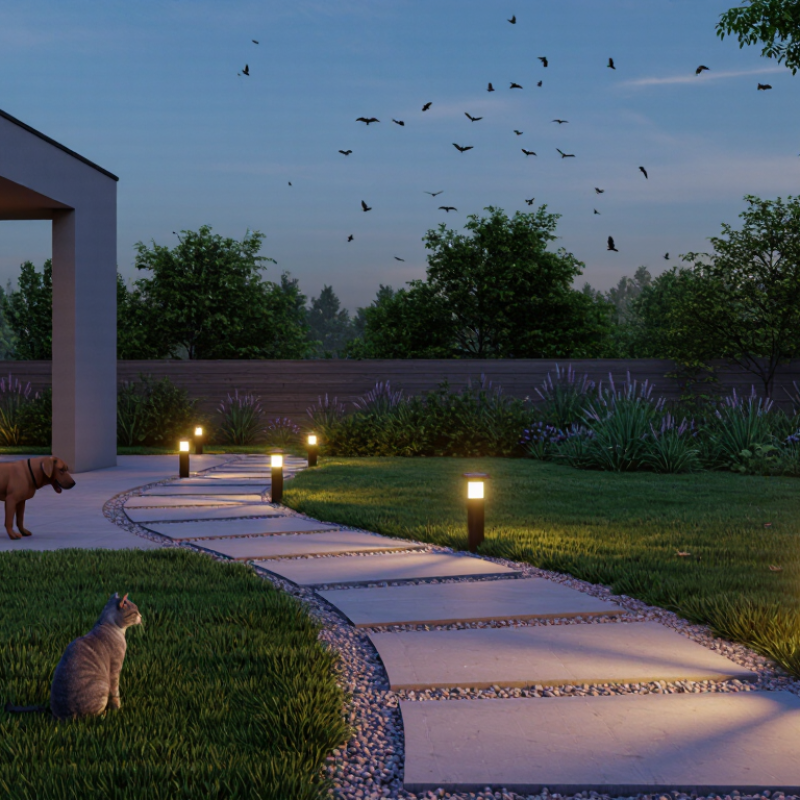
2026 Top Solar Lights Are They Safe for Pets and Wildlife?

Solar Light Safety Basics: LEDs Use 75% Less Energy and Last 25 Times Longer

2026 Top Solar Lights: Are They Safe for Pets and Wildlife?

Solar lights are usually gentle on pets and wildlife when used thoughtfully. Their LEDs use up to 75% less energy than traditional incandescent bulbs. They can also last up to 25 times longer. This reduces battery changes, waste, and maintenance around garden paths. Still, performance varies. A weak panel may produce flickering light after cloudy weather. Flicker can disturb some animals and may annoy sensitive pets.

Choose warm-white LEDs instead of harsh blue-white light. Aim fixtures toward the ground, not nesting areas or windows. Keep stakes away from digging zones and cover sharp edges. Low-voltage solar systems are generally safer than wired outdoor lighting, but damaged housings still need replacement.

During my evening checks, I noticed that a dim light often felt safer than a very bright one. That choice is easy to overlook.

Tips: Place lights at least several feet from bird feeders, ponds, and bat routes. Turn them off near natural habitats when illumination is unnecessary. Check for loose covers, trapped insects, and chewed cables each month. Avoid placing lights beside a pet’s sleeping area. Motion-sensitive settings may reduce disturbance, though they can startle animals. A small test area helps reveal problems before covering the whole garden.

How 2700K–3000K Warm LEDs Reduce Blue-Light Risks for Wildlife

For pet owners, 2700K–3000K warm LEDs can reduce blue-light exposure around patios, paths, and garden shelters. Lower color temperatures generally contain less short-wavelength energy than 4000K–6500K lamps. The American Medical Association recommends outdoor lighting at 3000K or below, with careful control of glare and light trespass. That guidance matters because blue-rich light can disturb nighttime behavior in birds, insects, and small mammals.

The ANSES 2019 health assessment also warned that blue-rich LED light may affect circadian rhythms, especially during darkness. Warm light is not blue-free. It is only a lower-risk starting point. CIE 150:2017 treats unwanted spill light as a concern, so shielding remains essential. Aim fixtures downward. Keep beams away from nesting areas, ponds, and animal sleeping spaces. A dim 2700K lamp may be kinder than a bright 3000K lamp.

Wildlife response is complicated. Moths may still circle warm LEDs, while nocturnal mammals can avoid brightly lit routes. Pets may tolerate warm lighting better, but individual animals differ. I have found that motion sensors and shorter operating times reduce unnecessary exposure. The less light, the better. Claims of complete safety would be careless. Manufacturers should publish spectral data, not only color temperature, because two “3000K” products can produce different blue-light levels.

2026 Top Solar Lights: Are They Safe for Pets and Wildlife? How 2700K–3000K Warm LEDs Reduce Blue-Light Risks for Wildlife

Lighting Factor Typical Data or Range Potential Effect on Pets Potential Effect on Wildlife Safer Outdoor-Lighting Practice
2700K–3000K warm-white LED Warm correlated color temperature; generally contains less short-wavelength blue energy than cool-white LEDs, although the exact spectrum varies by LED design. Usually comfortable for normal evening movement when brightness and glare are controlled. It does not replace veterinary advice for light-sensitive animals. Lower blue-light content can reduce disruption to many nocturnal species compared with cooler light, but any artificial light can alter behavior when it is bright, exposed, or used all night. A strong general choice for paths, entrances, and garden areas. Use shielding, low output, and timers or motion sensors.
Amber or very warm LED Approximately 1800K–2200K; often designed with very limited short-wavelength output, but the spectrum must be checked in the product specifications. Typically produces a softer visual environment and less harsh glare than cool-white light. Often preferred near habitats, migration-sensitive areas, and insect-rich gardens because shorter wavelengths can attract many insects more strongly. Use where wildlife sensitivity is a priority, while maintaining enough visibility for safe walking.
4000K neutral-white LED Neutral appearance with more short-wavelength energy than most 2700K–3000K products, depending on the spectral power distribution. Generally usable for short periods, but glare and visual discomfort may increase if the lamp is bright or directly visible. May have a greater effect on insects and nocturnal activity than warm-white light, especially when installed near vegetation or water. Use only when neutral color rendering is important; reduce output and direct the beam downward.
5000K–6500K cool-white LED Cool appearance with relatively more short-wavelength blue energy than warm-white LEDs, although color temperature alone does not define the full spectrum. Can appear harsher and create more glare, particularly for animals and people viewing the light source directly at night. More likely than warm light to contribute to ecological disturbance when bright, unshielded, or operated continuously. Avoid near nesting sites, ponds, pollinator gardens, and wildlife corridors unless there is a specific safety need.
Blue-light region Approximately 400–500 nanometres is commonly described as the blue portion of the visible spectrum. A lamp's actual risk depends on spectrum, intensity, distance, duration, and exposure angle. Normal outdoor exposure from a properly installed low-level lamp is generally less concerning than direct staring into a bright source. Short-wavelength light can influence circadian timing, navigation, insect behavior, and predator-prey interactions in some species. Choose warm or amber spectra and prevent direct line-of-sight exposure wherever practical.
Brightness and luminous output Lumens describe visible light output, not biological safety. Lower output is usually sufficient for orientation lighting; the suitable level depends on path width, surface reflectance, and mounting height. Excessive brightness can cause glare, startle responses, or difficulty adapting to darkness. Higher brightness increases light spill and the area exposed to artificial night lighting. Select the lowest output that provides safe navigation; avoid using floodlight-level output for decorative tasks.
Beam direction and shielding Fully or mostly shielded fixtures direct light toward the ground instead of horizontally or upward into the sky. Reduces direct glare for pets and people approaching the fixture. Limits illuminated habitat, skyglow, and attraction of flying insects around the lamp. Prefer downward-facing, shielded fixtures with no visible bright LED from normal viewing positions.
Operating schedule Motion sensors, schedules, and automatic shutoff reduce the total hours of nighttime exposure. Provides light when needed while preserving darker rest periods. Dark intervals support natural nocturnal activity and reduce continuous disturbance. Turn lights off when the area is unoccupied; use motion activation for security lighting.
Flicker performance Solar lights may use pulsed or switched drivers. Flicker percentage and flicker frequency are separate measurements and are not reliably predicted by color temperature. Visible flicker may be uncomfortable for some animals and people, especially at close range or during movement. The ecological significance varies by species and exposure; avoiding visibly unstable light is a sensible precaution. Choose products with published low-flicker or flicker-free performance when available.
Photobiological safety IEC 62471 evaluates optical-radiation hazards using factors such as irradiance, radiance, viewing distance, and exposure duration. CCT alone cannot prove a lamp is risk-free. A compliant, correctly installed lamp should not be viewed directly at close range; children and pets should not stare into bright LEDs. Human photobiological classifications do not fully measure ecological impacts, such as behavior or habitat disruption. Review safety documentation, install at a reasonable height, and avoid exposed high-intensity LED emitters.
Overall suitability for homes with pets and wildlife Warm-white 2700K–3000K, low output, shielded optics, and limited operating hours provide a balanced starting specification. Generally suitable for routine outdoor orientation when installed to avoid glare and direct viewing. Lower-impact than bright, cool, unshielded, all-night lighting, but no artificial light should be considered completely impact-free. Use the minimum light necessary, keep fixtures away from habitat edges, and switch them off whenever illumination is not required.
Data note: Correlated color temperature is not a complete description of an LED spectrum. Actual blue-light content depends on the spectral power distribution, optical design, brightness, mounting position, operating time, and surrounding habitat. The practical recommendations above are consistent with established principles in IEC 62471 photobiological safety guidance and outdoor-lighting recommendations that prioritize warm spectra, shielding, low intensity, and reduced operating duration.

Pet Safety Checks: Low-Voltage Systems, Battery Seals, and Heat Control

Safe solar lighting starts with low voltage, not marketing language. Many outdoor systems operate around 3–24 volts DC, reducing shock risk near curious pets. However, chewed insulation can expose conductors and create short circuits. The U.S. Department of Energy reports that LED lighting uses at least 75% less energy than incandescent lighting. Lower energy usually means less heat, but poor designs can still warm small enclosures.

Check the battery compartment closely. A proper seal should resist rain, dust, and pet contact. IEC 62133-2 covers safety testing for rechargeable lithium cells and batteries, but it does not certify every complete light fixture. Look for protected wiring, strain relief, and screws that paws cannot loosen. Replace swollen batteries immediately. Do not rely on glue alone.

Heat control matters too. Place lights away from dry bedding, nesting material, and plastic fencing. An IEC 60529 IP65 rating protects against dust and water jets; it does not permit immersion. CIE 150:2017 recommends limiting upward and stray light, which can reduce disturbance to nocturnal wildlife.

Warm-white light is often a gentler choice than intense blue-rich light. Still, “wildlife-safe” is not absolute. Brightness, timing, placement, and local species all change the outcome. My own checklist would include a nighttime touch test, though human hands are not precise instruments. A simple thermometer would be better.

Wildlife Protection: Shielded Fixtures, Timers, and Dark-Sky Principles

2026 Top Solar Lights: Are They Safe for Pets and Wildlife?
Wildlife Protection: Shielded Fixtures, Timers, and Dark-Sky Principles

Outdoor solar lights are usually safe for pets when installed thoughtfully. Choose sealed fixtures with no exposed wiring or loose battery covers. Keep them away from chewing paths, kennels, and water bowls. Inspect cracked housings after storms. Small details matter.

Wildlife needs darkness more than decoration. Shielded fixtures aim light downward and prevent bright halos across trees, ponds, and fences. Warm-colored LEDs are generally gentler than harsh blue-white light. Lower brightness also reduces disruption for moths, bats, and nocturnal insects. Birds may avoid overly bright nesting areas, while amphibians can change feeding patterns near illuminated water.

Use timers to switch lights off during the quietest hours. Motion sensors can limit unnecessary exposure, but sensitivity should be tested carefully. A sensor facing a busy sidewalk may activate all night. That defeats the purpose. Place lights low, avoid shining them into hedges, and leave one section of the garden naturally dark. Dark-sky guidance supports using the lowest useful brightness, directing light only where needed, and removing decorative lights during migration or nesting periods.

No setup is perfect. I still find that attractive lighting can spread farther than expected on wet ground. Check the area at night from an animal’s eye level. If glare reaches a tree canopy, pond, or pet shelter, reposition the fixture. Local conservation advice should guide sensitive habitats.

2026 Buying Standards: IP65+ Ratings, RoHS Compliance, and Flicker Control

In 2026, solar lights should be judged by more than brightness. A reliable buying standard starts with an IP65 rating or higher. IEC 60529 defines IP65 as protection against dust and water jets. It does not promise safe immersion. Check the sealed battery box, cable entry, and cracked gaskets after winter use.

RoHS compliance matters inside the product. The European Commission’s RoHS framework restricts ten hazardous substances in electrical equipment, including lead and mercury. Ask for a current declaration of conformity, not only a printed logo. The U.S. Department of Energy reports that modern LED systems can exceed 100 lumens per watt, but higher output may disturb nocturnal animals. A softer 2,700K–3,000K light is usually less harsh than cold blue-white light. That is a practical preference, not an absolute wildlife guarantee.

Flicker deserves closer attention. IEEE 1789 offers risk-based guidance for modulated LED light, although it is not a universal safety certification. Choose products with documented flicker measurements, steady drivers, and dimming controls. Avoid units that visibly pulse when viewed through a phone camera. Pets may react to subtle changes that people miss. Wildlife may respond even more strongly. My own checklist is imperfect: IP65 protects hardware, while it says little about insects, birds, or a nervous dog. Keep lights low, shielded, and away from nesting areas. DarkSky guidance also supports reducing unnecessary outdoor brightness and limiting light spill.

2026 Solar Light Buying Standards: IP Ratings and Safety Considerations

The chart uses the IEC 60529 IP classification system. The first digit indicates dust protection, while the second indicates water protection. An IP65 or higher rating is a practical baseline for outdoor solar lights: level 6 is dust-tight, and level 5 or above protects against water jets. RoHS compliance helps limit restricted hazardous substances in electrical products. For pets and wildlife, choose lighting with low glare, warm color temperature, no visible flicker, and motion or timer controls that reduce unnecessary nighttime illumination.

FAQS

Are solar lights generally safe for pets and wildlife?

Usually, yes, when positioned thoughtfully and used for limited periods. Individual animals may still react differently.

Which light color is gentler for nighttime animals?

Choose warm-white LEDs around 2700K–3000K. They generally produce less short-wavelength light than cooler lamps.

Does warm light eliminate blue-light risks?

No. Warm light is only a lower-risk choice. It still needs shielding and careful timing.

Where should garden solar lights be aimed?

Aim them toward the ground, not windows, nests, ponds, or animal sleeping spaces. Keep glare controlled.

How far should lights be placed from wildlife areas?

Keep them several feet from bird feeders, ponds, and known bat routes. More distance can reduce disturbance.

Can bright solar lights affect pets?

Yes, some pets may dislike glare or sudden motion-triggered lighting. Avoid lights beside sleeping areas.

Are motion-sensitive settings always better?

Not always. They reduce operating time but may startle animals when suddenly activated. Test a small area first.

What maintenance helps keep solar lights safer?

Check loose covers, sharp edges, trapped insects, and damaged cables monthly. Replace damaged housings promptly.

Do solar LEDs reduce waste and maintenance?

They can use up to 75% less energy and last up to 25 times longer than incandescent bulbs. Actual results vary.

How can owners judge whether lighting is too strong?

Observe pets and nearby wildlife after installation. A dimmer light may feel safer, but this judgment needs regular reconsideration.

Conclusion

Are solar lights safe for pets and wildlife? In most cases, yes, when they are designed and installed responsibly. Solar LEDs typically use about 75% less energy and last up to 25 times longer than traditional bulbs, reducing energy waste and replacement needs. Choosing warm LEDs between 2700K and 3000K can also limit blue-light exposure, which may be less disruptive to nocturnal wildlife. For pets, look for low-voltage systems with securely sealed batteries, protected wiring, and effective heat control to reduce risks from chewing, contact, or overheating.

Wildlife-friendly installation matters just as much as product quality. Shielded fixtures should direct light downward, while timers can turn lights off during periods of peak animal activity. Following dark-sky principles helps preserve natural darkness and reduce unnecessary glare. For 2026 purchases, consider products with IP65 or higher weather resistance, RoHS compliance, and reliable flicker control. These standards can support safer, more efficient outdoor lighting while helping protect household animals and local ecosystems.

Ethan

Ethan

Ethan is a seasoned marketing professional with a deep expertise in our company's innovative product line. With a passion for sharing knowledge and insights, he takes the lead in regularly updating our corporate blog, where he explores industry trends, product features, and effective marketing......