Solar lights can often gain some charge indoors, but the result is usually slower and less reliable than charging in direct sunlight. If you are asking, “can you charge solar lights with indoor lighting,” the practical answer is yes, with limits. A small panel may respond to a bright LED or incandescent lamp, yet ordinary room lighting may not provide enough usable energy for a full charge. The exact result depends on the panel, the lamp, the distance, and how long the light stays on.
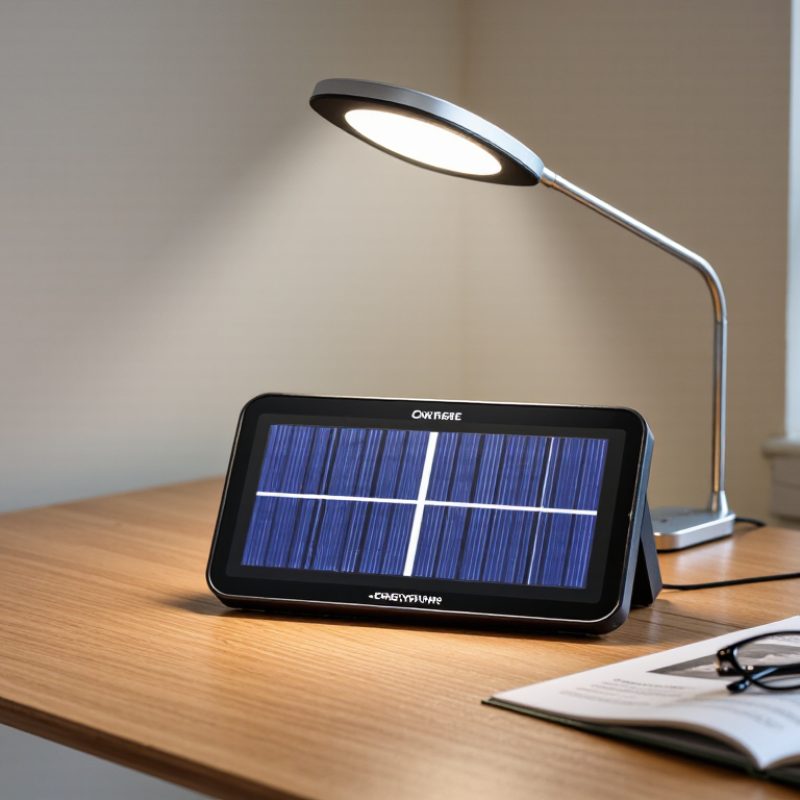
Picture a solar light placed on a desk beneath a bright lamp. It may collect energy, but moving it farther away or dimming the lamp can reduce charging. A sunny window may work better, though glass and changing daylight can affect the outcome. Don’t assume a light that turns on briefly has received a full charge. It may have stored only enough energy for a short run.
A simple check helps. Clean the panel, place the light under a bright lamp, and compare its runtime with a normal outdoor charge. Keep the lamp at a safe distance, and follow the product instructions. Some models may barely respond indoors. That is not necessarily a defect; indoor light is simply different from direct sun. For dependable nightly performance, outdoor daylight remains the better option. Indoor lighting can be a backup, not a guaranteed replacement.
A solar panel’s rated wattage is typically measured under standard test conditions: 1,000 W/m² of irradiance, a cell temperature of 25°C, and an AM1.5 sunlight spectrum. These controlled conditions make ratings easier to compare. They do not represent a typical room, even one that feels bright.
Indoor light delivers far less energy to a panel than the test reference, and its spectrum differs from sunlight. A panel may still generate electricity under a bright LED lamp, but charging can be very slow. That is dim. A small solar light might gain a little charge over several hours, yet fail to refill a depleted battery overnight. Distance, angle, shade, and panel size all affect the result. Lux describes brightness as people see it; it does not directly predict solar-panel output.
For a practical check, place the panel close to a bright lamp and watch its charging indicator or battery level. Keep the panel clear, and avoid heat from nearby bulbs. I would treat indoor charging as occasional backup rather than a dependable routine. The precise result depends on the light’s circuitry, so this estimate can miss device-specific details.
| Light source or test condition | Typical illuminance or reference level | What it means for a solar light | Practical guidance |
|---|---|---|---|
| IEC solar-panel rating reference (STC) | 1,000 W/m² irradiance; cell temperature 25°C; reference AM1.5 spectrum | This is a standardized outdoor-sunlight test condition used for comparing photovoltaic module ratings. It is not a typical indoor-light level. | Use the panel’s rated conditions as a benchmark, not as a promise of the same output under household lighting. |
| Typical office lighting | About 300–500 lux on a work surface | A panel may produce some electricity, but charging is generally much slower and may not keep up with the light’s energy use. | For meaningful charging, place the panel outdoors in direct sunlight or in the brightest suitable daylight available. |
| Bright indoor lighting | Often around 500–1,000 lux in well-lit areas; actual levels vary by room and distance from the fixture | Charging can occur, but the result depends on the panel, lamp spectrum, angle, distance, and battery condition. | Test the light over several hours and check whether its battery level or runtime increases; do not assume indoor light will fully recharge it. |
| Daylight near a window | Highly variable, commonly from hundreds to several thousand lux indoors depending on weather, glazing, orientation, and distance from the window | It may charge better than ordinary room lighting, but window glass, shading, and changing daylight reduce or vary the energy reaching the panel. | Move the panel close to an unshaded window and orient it toward the brightest daylight; outdoor exposure is usually more effective. |
| Outdoor daylight | Illuminance varies widely with cloud cover, sun angle, and shade; solar-panel output is best assessed by irradiance rather than lux | Outdoor sunlight is the intended charging source for most solar lights and can provide far more usable energy than typical indoor lighting. | Keep the panel clean and unshaded, and follow the product’s charging instructions. |
| Comparing lux with W/m² | No single reliable conversion applies across different light sources | Lux measures light as perceived by the human eye; photovoltaic response depends on the panel’s spectral response. LED, fluorescent, and sunlight spectra differ. | Do not convert an indoor lux reading directly into solar-panel power without knowing the light spectrum and panel characteristics. |
Note: Indoor lighting can generate electricity in a photovoltaic panel, but whether it provides useful charging depends on the specific panel, lamp, exposure time, and battery. Illuminance ranges above are general examples, not guaranteed charging specifications.
Ratings use 1,000 W/m² irradiance, a 25°C cell temperature, and an AM1.5 sunlight spectrum. These are controlled test conditions, not typical room lighting.
Yes, but charging may be very slow. A small solar light might gain some charge after several hours, yet not refill a depleted battery overnight.
No. Lux describes brightness as people see it, but it does not directly predict panel output. Not quite.
Distance, angle, shade, and panel size all matter. Keep the panel near a bright lamp, clear of shade, and away from bulb heat.
Start with two identical lights at the same battery level. Keep their panel angles and charging times consistent, then compare runtime after dark.
Repeat the test on separate days, starting at a similar battery level. Record the conditions each time; changing skies can skew results.
Not necessarily. Window glass and room lighting can reduce the energy reaching the panel. The difference may be large.
Repeat each test and average the runtimes. Note lamp distance, cloud cover, and battery condition. My first comparison was uneven.
Can you charge solar lights with indoor lighting? In some cases, yes, but charging indoors is usually much slower and less reliable than charging outdoors. Solar-panel ratings are commonly measured under standardized test conditions of 1,000 W/m² irradiance at 25°C. By comparison, EN 12464-1 recommends 500 lx for many office tasks. These figures describe different things: lux measures light as perceived by the human eye, while irradiance measures the light energy reaching a surface. A room that looks bright may therefore provide too little usable energy for a solar panel.
To judge whether indoor charging will work, check the panel’s specifications, the battery capacity, and any stated charging requirements. The lamp’s position and the type and intensity of the indoor light can also affect results. For a practical comparison, measure how long the light takes to charge indoors under consistent conditions, then compare that time with charging outdoors in direct sunlight. This test can show whether indoor lighting is sufficient for occasional top-ups or whether outdoor exposure is necessary for dependable performance.

 Sanitize Light