China Top Landscape Lights How to Choose Color Temperature?

Time:2026-10-13 Author:Isabella
0%

Choosing landscape lighting in China involves more than selecting a fashionable fixture or the highest lumen output. Color temperature shapes how stone, foliage, water, and human skin appear after sunset. For this reason, buyers need a practical method for how to choose the right color temperature for landscape lighting.

Professional guidance supports a careful approach. The Illuminating Engineering Society and the International Dark-Sky Association recommend warmer, controlled light for reducing glare, skyglow, and unnecessary disturbance. CIE 150:2017 also identifies poorly controlled outdoor light as a source of obtrusive lighting. Meanwhile, the U.S. Department of Energy’s Solid-State Lighting research reports highlight LED control, efficiency, and spectral flexibility as major advantages. These benefits matter, but efficiency alone cannot determine the correct Kelvin value.

In real projects, 2700K often gives gardens, timber, and warm stone a comfortable appearance. Around 3000K can provide clearer pathways and stronger architectural definition. Higher temperatures may suit modern façades, yet they can make green leaves look harsh or blue. The result depends on brightness, beam angle, surface color, and viewing distance. It also depends on local expectations.

A reliable Chinese landscape-lighting supplier should provide photometric files, measured color consistency, glare-control details, and samples tested outdoors. Ask for a night demonstration. Place one 2700K fixture beside one 3000K fixture near the same tree. The difference becomes obvious.

There is no universal answer. That is the uncomfortable part. A specification that looks perfect on paper may fail beside a wet walkway or pale wall. Good selection combines recognized standards, supplier evidence, and careful on-site observation.
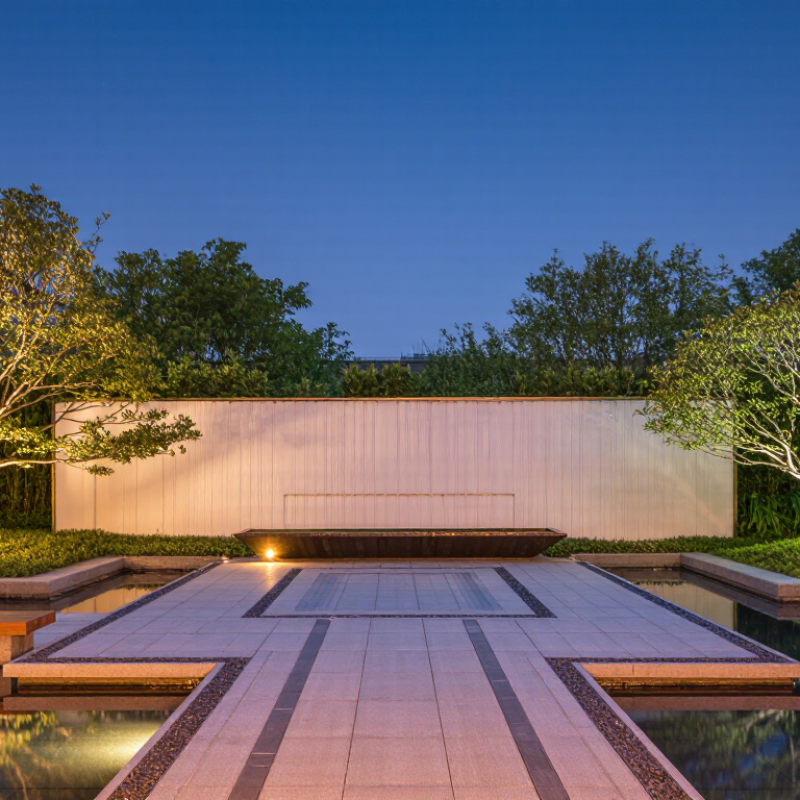
China Top Landscape Lights How to Choose Color Temperature?

Understanding Color Temperature in Landscape Lighting

China Top Landscape Lights: How to Choose Color Temperature?

Understanding Color Temperature in Landscape Lighting

Color temperature describes how warm or cool a landscape light appears. It is measured in Kelvin (K). Lower values look warmer, while higher values appear whiter or bluer. For gardens, pathways, and residential façades, 2700K to 3000K usually creates a comfortable evening atmosphere. Warm feels natural. It also reduces harsh contrast on stone, timber, and planting.

On recent outdoor projects, I have found 2700K works well near seating areas, while 3000K gives steps and entrances clearer visual definition. A 4000K fixture can reveal texture effectively, but it may feel too cold beside trees or warm-colored walls.

Test it at night. Daylight judgment is unreliable. The IES and DarkSky guidance generally favors outdoor sources at 3000K or below when glare, blue light, and skyglow require control. CIE 150:2017 also stresses limiting obtrusive light through shielding, aiming, and environmental-zone planning.

Color temperature should not be confused with efficiency. The U.S. Department of Energy’s 2023 Solid-State Lighting R&D Opportunities report identifies laboratory LED performance above 200 lumens per watt, but real landscape fixtures perform lower after optics, drivers, and housing losses. Higher Kelvin does not automatically mean better visibility. That assumption needs reconsideration. In practice, beam angle, mounting height, glare control, and dimming often matter more than a small Kelvin difference. A useful specification may request 2700K, high color rendering, shielded optics, and measured photometric data rather than relying on appearance alone.

How Color Temperature Affects Outdoor Ambiance and Visibility

Choosing color temperature is central to creating comfortable and useful outdoor spaces. It affects how paths, plants, walls, and entrances appear after sunset. Color temperature is measured in Kelvin (K). Lower values look warmer, while higher values appear cooler and more bluish.

For gardens, patios, and seating areas, 2700K to 3000K often creates a relaxed atmosphere. Warm light can make stone surfaces and wood look richer. It also feels less harsh near windows. Along walkways, moderate warmth can improve visual comfort without making the landscape look flat. However, very warm light may reduce color accuracy. Red flowers and green leaves can appear less natural.

For steps, driveways, and security-sensitive areas, 3000K to 4000K may provide clearer visibility. Cooler light reveals edges, changes in height, and surface textures more effectively. It can also help people notice movement across a larger area. Yet excessive brightness creates glare. That can make nearby shadows harder to read. I have sometimes chosen a cooler lamp for visibility, then found the space felt overly clinical. The setting matters.

Use shielded fixtures and aim light toward walking surfaces, not directly toward eye level. Test the color temperature at night with the actual paving and plants. A sample may look different outdoors. Do not rely on a catalog image alone. Light reflected from pale walls can increase perceived brightness, while dark stone absorbs it. Human vision also changes after several minutes in darkness, so evaluate the installation again later.

Choosing the Right Kelvin Range for Different Landscape Areas

Choosing landscape light color temperature starts with the area, not the fixture. Kelvin measures how warm or cool the light appears. Lower values create amber tones, while higher values look whiter or slightly blue.

For seating areas, balconies, and heritage gardens, choose 2200K–2700K. This range makes timber, stone, and skin tones feel comfortable after sunset. It also reduces glare near dining tables. Pathways and planted borders usually work well at 2700K–3000K. The light remains warm, but it reveals steps and textured leaves more clearly. For modern walls, sculptures, and pale paving, 3000K–3500K can provide sharper definition without feeling overly clinical.

Security-focused zones may use 3500K–4000K, but brighter light is not always safer. Excessive blue content can create glare and hide details beyond the lit area. I once selected 3000K for dense planting and found the foliage looked flatter than expected. A warmer 2700K sample showed better leaf depth. Field testing matters.

Color rendering also deserves attention. A lamp with strong color rendering can make flowers and natural stone appear more accurate. Check the light at dusk, after rain, and from normal walking height. Wet leaves reflect light differently. Nearby windows may also expose unwanted brightness. For projects using lights made in China, request verified Kelvin data, photometric files, and sample testing before installation. The stated value can vary slightly between production batches.

Comparing Warm, Neutral, and Cool Landscape Lighting Effects

China Top Landscape Lights: How to Choose Color Temperature?

Warm, neutral, and cool light create very different landscape experiences. Warm light, usually 2700K–3000K, softens stone, wood, and planting beds. It feels intimate beside seating areas and garden paths. I have found 3000K easier to balance than very amber light. Neutral light, around 3500K–4000K, reveals foliage texture and pathway edges more clearly. It suits courtyards, entrances, and mixed residential landscapes. Cool light, commonly 5000K and above, appears crisp but can make plants look flat. It may also feel harsh near homes.

The Illuminating Engineering Society’s TM-30-20 method evaluates color using 99 color samples, not only a basic CRI number. This matters when red flowers, green leaves, and beige paving must appear natural. DarkSky guidance generally encourages warmer outdoor lighting, often 3000K or lower, to reduce blue-rich glare and protect nighttime environments. The exact choice still depends on mounting height, beam angle, surface color, and surrounding brightness. Color temperature alone cannot solve poor lighting design.

For many landscape projects, 2700K works well around terraces and mature trees. Neutral 3500K can improve visual guidance on steps without feeling clinical. Cool light should be used carefully, especially near bedrooms and reflective walls. My own preference is not always correct. A small nighttime mock-up can expose uncomfortable shadows, excessive brightness, or mismatched fixtures before installation. That practical test is often more reliable than a specification sheet.

China Top Landscape Lights: How to Choose Color Temperature?

Comparing warm, neutral, and cool landscape lighting effects

Warm white lighting, typically 2,200–3,000K, creates a comfortable and welcoming atmosphere for patios, gardens, and residential pathways. Neutral white lighting, generally 3,500–4,500K, provides a balanced appearance and works well for driveways, entrances, and mixed-use outdoor areas. Cool white lighting, commonly 5,000–6,500K, produces a crisp, high-visibility effect that is suitable for security lighting and modern architectural landscapes.

The chart shows commonly used correlated color temperature ranges in landscape lighting.

Evaluating Chinese Landscape Light Quality and Application Needs

China Top Landscape Lights: How to Choose Color Temperature?

Evaluating Chinese landscape light quality starts with application needs, not catalog appearance. For residential gardens, 2200K–2700K creates a calm, low-glare atmosphere. Around 3000K suits paths, façades, and planting areas. Higher temperatures can reveal detail, but often feel harsh at night. I have found that a beautiful sample can still fail outdoors. Check the full fixture, driver, lens, and cable system. ENERGY STAR reports that LED products use at least 75% less energy and can last up to 25 times longer than incandescent lighting. However, poor thermal design may shorten real service life.

Request LM-79 photometric testing, LM-80 data, and TM-21 lifetime projections. These documents help verify output, color stability, and expected depreciation. For Chinese landscape lights, also inspect IP65 or higher protection, corrosion resistance, surge protection, and flicker performance. The U.S. Department of Energy’s 2023 Solid-State Lighting report highlights efficacy, controls, and reliability as continuing industry priorities. A high CRI, preferably 80 or above, improves plants, stone, and wood appearance. Still, CRI alone is not enough.

Tips: Compare a 2700K and 3000K sample after sunset. Measure glare from normal eye height. Ask for field-test photos, not only studio images. Confirm warranty terms and spare-driver availability. I still question warm light near dense planting; excessive amber tones can hide texture. Test before ordering at scale.

China Top Landscape Lights: How to Choose Color Temperature? — Evaluating Chinese Landscape Light Quality and Application Needs

Color Temperature Visual Appearance Recommended Landscape Applications Main Advantages Quality and Application Considerations
2200K–2400K
Extra warm white
Amber, candle-like light with a very warm appearance. Historic buildings, heritage districts, hospitality areas, quiet gardens, pathways, and wildlife-sensitive locations. Creates a relaxed atmosphere and generally produces less short-wavelength blue light than cooler sources. Check that the light does not make white surfaces look excessively yellow. Use precise shielding to limit light trespass.
2700K
Warm white
Soft warm white, similar to traditional incandescent lighting. Residential gardens, villas, restaurants, resorts, patios, planting beds, and decorative façade lighting. Comfortable and welcoming; complements wood, brick, stone, and warm-colored materials. A CRI of 80 or higher is suitable for general use; CRI 90 or higher is preferable where plant, stone, or artwork colors must be rendered accurately.
3000K
Neutral warm white
Balanced warm white with less yellow than 2700K. Most residential and commercial landscape projects, parks, walkways, entrances, trees, and façades. Good balance between visual comfort, color rendering, and architectural clarity. Often a practical default for outdoor landscape lighting. Confirm consistency between fixtures by checking measured CCT and color variation.
3500K
Intermediate white
Clean white with a slightly warm-to-neutral appearance. Modern commercial landscapes, public plazas, office grounds, pedestrian areas, and contemporary architecture. Provides a clearer appearance while remaining less harsh than cooler white light. Use only when the surrounding indoor or architectural lighting has a similar appearance. Evaluate glare carefully in pedestrian areas.
4000K
Neutral white
Clean, neutral white with a cooler visual impression. Sports and recreational areas, security-related circulation zones, modern public spaces, and functional site lighting. Supports visual clarity and can coordinate with many modern exterior materials. May appear too cool for traditional gardens or hospitality settings. Specify glare control, shielding, and appropriate illuminance rather than relying only on higher wattage.
5000K–6500K
Cool white to daylight
Bright, bluish-white appearance. Specialized security, industrial sites, or applications where daylight-like appearance is specifically required. Can provide a strong sense of brightness and visual contrast in task-oriented environments. Usually unsuitable for decorative landscape projects because it can look harsh and increase visual disturbance. Check local requirements for light pollution and ecological impact.

Landscape Light Quality Evaluation Checklist

Evaluation Dimension Practical Reference Why It Matters Recommended Verification
Ingress Protection IP65 for protected outdoor areas; IP66 or higher for locations exposed to heavy rain or water jets. In-ground fixtures may require a higher project-specific rating. Reduces the risk of dust or water entering the housing and damaging electrical components. Review the test report and product marking; confirm that seals, cable glands, and connectors match the stated rating.
Color Rendering CRI 80+ for general landscape lighting; CRI 90+ for high-quality architectural, hospitality, art, or planting displays. Higher color rendering generally makes materials, foliage, and finishes appear more natural. Request photometric data and, where needed, TM-30 results instead of relying only on marketing descriptions.
Color Consistency Prefer a clearly stated color bin or small color deviation, such as a low SDCM value, for projects using many fixtures. Reduces visible differences between adjacent luminaires and prevents patchy illumination. Inspect a production sample batch under the intended mounting and viewing conditions.
Thermal Management Use corrosion-resistant housing materials, adequate heat sinking, and a driver rated for the specified ambient temperature. Excessive heat can accelerate LED lumen depreciation and shorten driver life. Check thermal test data, operating temperature limits, housing construction, and installation clearances.
Optical Control Select beam angles and shielding based on tree height, pathway width, façade distance, and intended viewing direction. Good optics improve uniformity while reducing glare, wasted energy, and light spill. Review the IES or equivalent photometric file and test the fixture on site before final installation.
Electrical Safety Use a driver compatible with the local supply, suitable surge protection, reliable grounding, and correctly rated outdoor connectors. Protects the installation from moisture, voltage fluctuation, transient surges, and electrical faults. Verify applicable safety certifications, wiring diagrams, driver specifications, and installation instructions.
Durability and Corrosion Resistance Choose materials and finishes appropriate for coastal, humid, polluted, or high-traffic environments. Outdoor corrosion can weaken housings, fasteners, brackets, and electrical connections. Inspect coating quality, fastener material, drainage design, and environmental test documentation.
Controls and Dimming Consider photocells, timers, 0–10 V, DALI, or other control methods when operating schedules or energy limits require them. Controls can reduce operating hours, energy use, glare, and unnecessary nighttime illumination. Test dimming stability, minimum dimming level, driver compatibility, and control-system integration.
Photometric Performance Evaluate delivered lumens, beam distribution, uniformity, and target illuminance rather than wattage alone. A correctly designed lighting layout provides adequate visibility without excessive brightness or energy consumption. Use verified photometric files and compare calculated results with measured illuminance after installation.
General selection guidance: For many decorative landscape projects, 2700K–3000K offers a comfortable and versatile appearance. The final choice should also consider surrounding lighting, architecture, vegetation, pedestrian comfort, wildlife sensitivity, glare control, local regulations, and the required maintenance conditions.

FAQS

What does color temperature mean in landscape lighting?

Color temperature describes whether light looks warm or cool. It is measured in Kelvin, or K. Lower values appear warmer.

Which color temperature suits seating areas and garden paths?

Choose 2700K to 3000K for a comfortable evening atmosphere. Warm light softens stone, timber, and planting beds. It feels inviting.

Is 3000K better than 2700K for steps and entrances?

Often, yes. Around 3000K can define step edges and entrances more clearly. However, glare and beam angle still matter.

When might neutral light be useful outdoors?

Neutral light around 3500K to 4000K can reveal foliage texture and pathway edges. It may suit courtyards and mixed residential areas. Test it carefully.

Why can cool light create problems near homes?

Light above 5000K can appear crisp but harsh. Plants may look flat beside cool light. Reflective walls can increase discomfort.

Does a higher Kelvin value provide better visibility?

No. Higher Kelvin does not automatically improve visibility. Beam angle, mounting height, shielding, and dimming often matter more.

How can I judge the right color temperature before installation?

Test several fixtures at night. Daylight can mislead you. Look at stone, leaves, steps, and nearby windows together.

Does color rendering matter in landscape lighting?

Yes. Strong color rendering helps red flowers, green leaves, and beige paving appear natural. A basic rating may not show every color accurately.

What details should a landscape lighting specification include?

Specify the Kelvin range, color rendering quality, shielded optics, and measured photometric data. Appearance alone is not enough. I sometimes trust the specification too much.

Conclusion

Choosing the right color temperature is essential for creating attractive, comfortable, and functional outdoor spaces. This guide explains how Kelvin ratings influence the appearance of landscape lighting, visibility, and overall ambiance. Warm light, generally between 2200K and 3000K, creates a welcoming and relaxing atmosphere for gardens, patios, pathways, and residential areas. Neutral light, around 3500K to
4100K, offers a balanced appearance that supports clearer visibility in entrances, driveways, and public spaces. Cooler light, above 5000K, provides a crisp, modern effect but should be used carefully to avoid glare and an overly harsh environment.

The article also explores how to choose the right color temperature for landscape lighting according to each area’s purpose, surrounding materials, and desired mood. When evaluating landscape lights produced in China, buyers should consider color consistency, weather resistance, energy efficiency, durability, and suitability for local application conditions. A thoughtful combination of color temperature and reliable product quality can improve both the visual appeal and practical performance of outdoor lighting.

Isabella

Isabella

Isabella is a dedicated marketing professional with a sharp focus on driving brand growth and engagement through strategic content creation. With an extensive background in digital marketing, she combines her passion for storytelling with her keen understanding of industry trends to deliver......