Choosing between monocrystalline and polycrystalline solar panels in 2026 is not just a question of appearance. It is a decision about roof space, local sunlight, upfront cost, and the electricity your household actually uses. Monocrystalline panels usually offer higher efficiency in a smaller area. Polycrystalline panels may cost less, though availability and pricing vary by market. The difference matters most when your roof is shaded, unusually small, or difficult to expand. A blue panel on a garage roof can look like a simple choice. It is not always one.
So, what is the difference between monocrystalline and polycrystalline panels? The answer starts with how their silicon cells are made, but it should end with a careful comparison of real system quotes. Solar researcher Dr. Sarah Kurtz’s work focuses on photovoltaic performance and reliability; a practical paraphrase of that research-minded approach is to evaluate panels in real operating conditions, not by labels alone. Check the quoted wattage, warranty terms, temperature performance, and estimated annual production. Then compare those figures against your roof and utility bill. Small details count. A high-efficiency module may help on a cramped roof, while a lower-cost option could make sense where space is plentiful. Still, assumptions can be wrong: shade changes, installer quality varies, and published estimates are not guarantees. This guide explains the trade-offs, highlights what to ask installers, and helps you choose based on your site rather than a sales slogan.
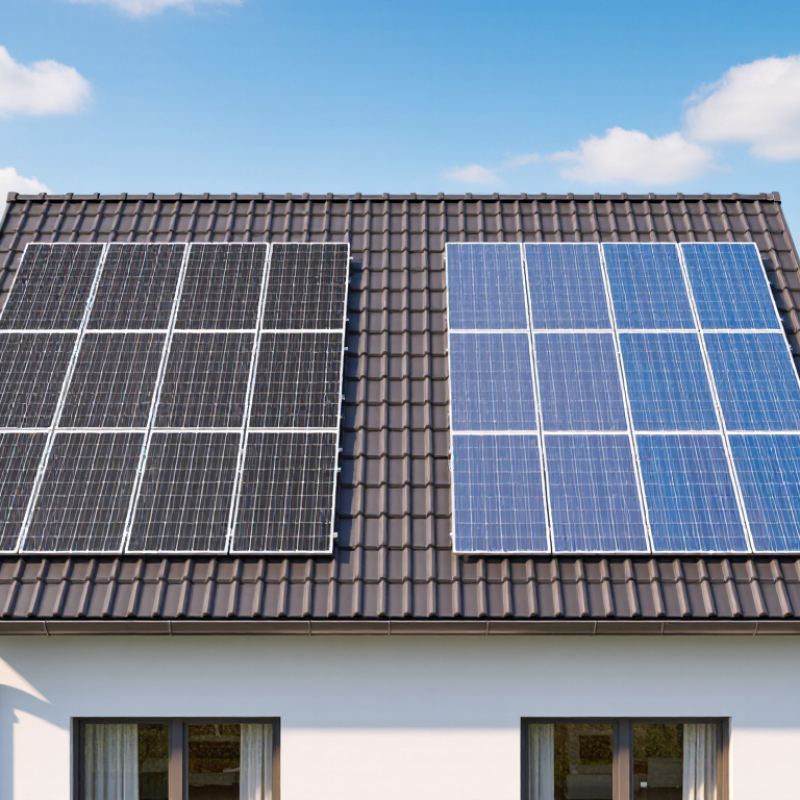
Monocrystalline and polycrystalline panels differ mainly in how their silicon cells are made. Monocrystalline cells come from a single silicon crystal and usually appear nearly black. Polycrystalline cells form from several melted silicon crystals, creating a blue, grainier surface. The difference is more than appearance. Monocrystalline panels generally produce more power per square metre, which can help when a roof has limited space. Polycrystalline panels may need more area for the same rated output. That difference matters.
In 2026, compare current quotes instead of assuming polycrystalline panels always cost less. Prices and availability can change, and the gap may be smaller than expected. Picture a roof with room for eight panels, but a vent and a chimney take up part of the usable area. Higher-efficiency panels could make better use of that space. Yet shade from the chimney can still reduce production; the effect depends on the system’s wiring and power electronics.
Efficiency alone does not settle the choice. Check each panel’s dimensions, rated output, temperature performance, and warranty, then compare them with your roof’s direction and local conditions. A lower-priced panel may be sensible on a large, open roof. A compact, efficient option may suit a cramped one. There is no perfect winner. Even a careful estimate can miss seasonal shade or future roof work, so leave room to question the first calculation.
On a tight roof, efficiency is practical: it determines how much power fits between vents, skylights, and the ridge. Fraunhofer ISE’s 2024 Photovoltaics Report puts commercial monocrystalline modules around 22% efficient, compared with roughly 18–20% for multicrystalline (poly) modules. That gap can mean fewer panels for the same output. Useful, sometimes.
Poly panels have historically cost less, but the module price is only part of the bill. Berkeley Lab’s Tracking the Sun 2024 report puts the median installed price of 2023 residential systems at about $3.3 per watt. That figure covers whole systems, not a direct mono-versus-poly price comparison. Compare installed quotes, warranties, and expected annual output—not module prices alone.
On a small roof, mono’s higher output per square metre may justify its premium. With open, unshaded ground, lower-cost poly can still work, if local suppliers stock it. Availability matters. A roof sketch and shade check beat a neat spreadsheet; I’d verify both before choosing.
| Comparison factor | Monocrystalline (Mono) | Polycrystalline (Poly) | What it means for your choice |
|---|---|---|---|
| Typical module efficiency | About 20–23% for many current residential modules; some higher-efficiency models exceed this range. | About 15–18% for commonly cited conventional polycrystalline modules. | Mono generally produces more electricity from the same panel area. Actual efficiency varies by model and cell design. |
| Approximate power density | Roughly 200–230 watts per square metre at standard test conditions, based on the efficiency range above. | Roughly 150–180 watts per square metre at standard test conditions, based on the efficiency range above. | Higher power density can reduce the roof area needed for a given system capacity. |
| Roof-space needs | Usually the better fit when usable roof area is limited or partly shaded by obstructions. | Typically needs more module area to reach the same rated capacity. | Compare the module dimensions and rated watts on the specific product datasheets, not just the cell type. |
| Upfront panel cost | Often competitively priced; broad manufacturing scale has made mono widely available. | Historically could cost less, but lower price is not guaranteed in today’s market. | Compare installed cost per watt for complete, like-for-like quotes. Inverter, mounting, labour, and local market conditions affect total cost. |
| Temperature performance | Depends on the specific cell technology and module design; check the temperature coefficient on the datasheet. | Also depends on the specific module; do not assume every poly panel performs the same in heat. | A less-negative power temperature coefficient generally means a smaller output reduction as module temperature rises. |
| Availability in 2026 | Widely available across residential and commercial product ranges. | Less commonly offered in many markets as manufacturing has shifted toward mono-based technologies. | Check local product availability, replacement options, and the supplier’s current technical documentation. |
| Appearance | Often has a dark, uniform appearance, though finishes vary by module design. | Often has a blue, patterned appearance, though appearance varies by product. | For visible roof installations, compare actual product images or samples; appearance is a preference, not a performance guarantee. |
| Best suited to | Space-constrained roofs, higher capacity goals, or projects where maximizing output per square metre matters. | Projects where suitable products are available and a lower purchase price outweighs the additional area requirement. | Choose based on the full system design, roof conditions, product warranty, and total installed price. |
Note: Figures are indicative technology-level ranges, not specifications for a particular product. Efficiency and power density are based on standard test conditions; real-world output varies with orientation, shading, temperature, inverter design, and installation. Polycrystalline modules are less common in many markets in 2026, so verify current local availability and datasheets.
In hot regions, do not choose a panel type by efficiency alone. Both mono and poly panels lose some output as temperatures rise, so compare the temperature coefficient on each product’s datasheet. A well-ventilated roof can help reduce heat buildup; tight mounting against a dark roof may leave panels hotter. Shade changes everything. A chimney shadow crossing one row each afternoon can reduce production, even when the rest of the roof is sunny.
Mono panels typically deliver more power per square metre, which can matter on a small roof or one crowded by vents. Poly panels may suit a larger, unobstructed roof where space is less constrained, though actual prices and availability vary. That old rule is imperfect: panel designs change, and the label alone cannot tell you which system will produce more energy. Compare rated output, temperature performance, and shade behaviour for the specific models available.
Local weather and installation details matter just as much. In snowy areas, consider roof pitch, snow sliding, and whether the array leaves room for maintenance. In windy or coastal locations, ask an installer to assess roof structure, mounting hardware, and corrosion exposure. I would not treat a sunny climate as automatically ideal; dust, high heat, or afternoon shade can change the result. A site-specific estimate is more useful than a panel-category shortcut.
Choosing mono or poly panels in 2026 starts with your roof, not a label. Monocrystalline panels usually produce more power per square foot, which can matter when a roof has limited sunny space. Their upfront price may be higher. For a small roof or a household aiming to cover most daytime use, that extra output could be worth comparing against the full installation cost. Every roof differs.
Polycrystalline panels may suit a larger, less constrained roof when the installed quote is meaningfully lower. But availability and pricing vary by market, so do not assume they are always the budget option. Ask installers for comparable quotes that include panel wattage, inverter, mounting, labor, and estimated annual production. Check the assumptions behind those estimates, especially shading and roof direction. Small details matter.
Match the choice to your actual energy goal. If you want to reduce a modest bill, a lower-cost system may be enough; if you plan to add an electric vehicle or heat pump, leave room for future demand. Compare cost per estimated kilowatt-hour, warranty terms, and degradation figures, not efficiency alone. A spreadsheet helps. Mine would still need real utility bills and a careful roof assessment before I trusted its answer.
In 2026, compare panels against your roof, not just their labels. Monocrystalline panels usually produce more power per square metre, which can help when roof space is tight. Polycrystalline panels may suit a larger, less constrained roof, depending on available models and the full system price. Check the quoted output, panel dimensions, and expected performance in your area. A higher efficiency rating alone does not guarantee a better investment.
Tips: Measure usable roof space, including vents and shaded sections. Ask how shade affects the proposed layout. Check product and performance warranties, expected output decline, and whether the inverter matches the panel system. Compare complete quotes, not panel prices alone.
Before choosing, review how your roof faces and how nearby trees or buildings cast shadows during the day. Ask the installer to explain their energy estimate and what assumptions it uses. Also check roof condition; panels can make later repairs more involved. I would not treat one technology as the clear winner without seeing your roof and comparing current quotes. Estimates are estimates, and small differences in real-world conditions can matter.
Typical module-efficiency ranges (%, indicative market ranges—not a guarantee for every panel)
Monocrystalline panels generally offer higher efficiency, which can help when roof space is limited. Polycrystalline panels may suit projects where upfront cost and available space are the priority. Before choosing, compare current product datasheets, installed cost, usable roof area, warranties, temperature performance, and local incentives. Actual efficiency varies by model and manufacturer.
Monocrystalline cells use one silicon crystal and usually look nearly black. Polycrystalline cells use multiple crystals and often have a grainier blue surface.
Monocrystalline panels generally provide more power per square metre. That can help when vents, skylights, or a chimney limit the usable roof area. Space matters.
No. They have often cost less, but current prices and availability vary. Compare complete installation quotes, not just panel prices.
Check the specific models’ rated output, dimensions, and temperature performance. Efficiency helps estimate how much power fits on your roof, but it does not tell the whole story.
Yes. Both can lose output as temperatures rise. Compare each model’s temperature coefficient, and ask whether the installation allows air to circulate beneath the panels.
A chimney shadow crossing one row each afternoon can reduce production. The effect depends on system wiring and power electronics. Shade deserves a closer look.
They may suit a large, open roof where space is less restricted. Check local availability, though; a suitable option may not be stocked nearby.
Check roof direction, seasonal shade, pitch, and room for maintenance. In windy or coastal areas, ask about roof structure and mounting hardware. Estimates can miss things.
Choosing between monocrystalline and polycrystalline solar panels in 2026 starts with understanding how their construction affects performance. If you are asking “what is the difference between monocrystalline and polycrystalline panels,” the key considerations include efficiency, upfront cost, and the roof or ground area available. Monocrystalline panels generally suit installations where space is limited and higher output per area matters, while polycrystalline panels may appeal to buyers prioritizing lower initial costs and who have room for a larger array.
Climate and installation conditions also influence the decision. Compare expected sunlight, temperature patterns, roof orientation, shading, and mounting options rather than choosing by panel type alone. Then match the system to your budget and energy goals, including the amount of electricity you use and whether you plan to expand later. Before deciding, review current efficiency ratings, warranties, certifications, installer estimates, and local installation requirements to make a practical comparison for your specific site.

Sanitize Light