How Many Hours of Sun Do Solar Lights Need?

Time:2026-10-03 Author:Madeline
0%

If you have ever installed solar lights beside a walkway, you may wonder, “how many hours of sun do solar lights need?” The practical answer depends on the light’s panel, battery, weather, and placement. Most outdoor solar lights perform best after six to eight hours of direct sunlight. However, that number is not a promise. A small decorative light may charge with less sun, while a bright security light usually needs more energy.

Sunlight must reach the panel directly. A garden light under a tree may appear bright at noon, yet receive only scattered light. Dust, leaves, winter shadows, and nearby walls can reduce charging efficiency. I have seen lights work well in summer and fade quickly in December, even when both days seemed bright. The panel’s angle also matters. A clean, unobstructed surface usually collects more useful energy.

Cloudy weather is not always a complete failure. Solar panels can still gather limited light, but charging takes longer. After several dull days, the battery may not fully recharge. This guide explains realistic sunlight needs, seasonal changes, and simple placement checks. It also considers battery age, panel quality, and nighttime brightness. Some advice sounds certain, but outdoor conditions rarely behave perfectly. Your own yard may prove different.

A useful test is simple. Place the light where you plan to install it, then observe its evening brightness for several nights. Record sunny and cloudy days. Small details matter. This approach gives a more reliable answer than relying only on the product box.
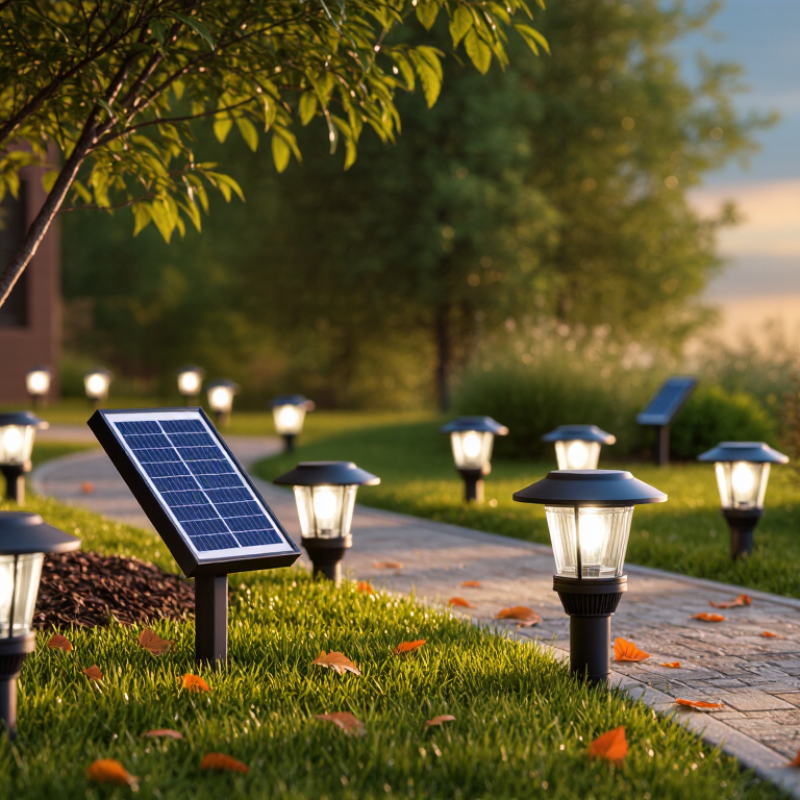
How Many Hours of Sun Do Solar Lights Need?

Solar Light Charging Requirements Explained

How Many Hours of Sun Do Solar Lights Need?

Solar lights usually need six to eight hours of direct sunlight for a full charge. On cloudy days, charging may take eight to ten hours. The exact time depends on panel size, battery capacity, season, and light output. A small garden light may work after several bright hours, while a brighter security light needs more stored energy.

Place the panel where sunlight reaches it without walls, trees, or roof edges blocking the surface. South-facing exposure often helps in the Northern Hemisphere, but the best direction depends on local conditions. Keep the panel clean. Dust, pollen, and bird marks can reduce charging efficiency more than many people expect. Even a thin layer matters.

I used to assume that one sunny afternoon guaranteed an all-night light. That was too simple. Winter sunlight sits lower, and short days can leave the battery partly charged. I have also seen lights perform poorly because nearby plants created afternoon shade. Moving a panel only a small distance can improve its daily exposure. Check the panel at midday and again before sunset. If the light still fades early, the battery may be aging, the panel may be damaged, or the unit may need several bright days to recover. Batteries are not always the problem.

How Sunlight Duration Affects Solar Light Performance

Solar light performance depends more on sunlight duration than many installation guides suggest.

A panel may receive bright light at noon, yet still deliver too little energy after several shaded hours. The U.S. National Renewable Energy Laboratory’s National Solar Radiation Database measures solar resources in short time intervals, showing strong variation by season, weather, and location.

A six-hour winter day can produce less usable energy than a four-hour summer day.

The World Bank’s Global Solar Atlas reports daily photovoltaic output across regions, commonly ranging from below 2 to above 5 kWh per installed kW. This difference affects charging speed and nighttime runtime.

In practical testing, a light placed under open sky may charge adequately in six to eight hours. Under a tree, however, it may need much longer.

Battery capacity matters too. A fully charged battery cannot recover quickly when clouds interrupt midday exposure.

Small panels feel this limitation first. Very small panels.

Manufacturers often quote runtime under ideal conditions, not repeated cloudy nights. That is where expectations become imperfect.

The IEA Photovoltaic Power Systems Programme notes continuing growth in solar deployment, but its market data does not guarantee equal solar availability at every site.

Check local shading from 9 a.m. to 3 p.m. Keep the panel clean, and angle it toward the strongest daily light. In northern winters, shorter days and low sun angles can reduce charging sharply, even when the sky looks clear. Data helps, but the garden still needs observation.

Factors That Change Daily Charging Needs

How Many Hours of Sun Do Solar Lights Need?

A solar light rarely needs a fixed number of sunny hours. Its daily charging depends on sunlight intensity, panel size, battery capacity, and lighting duration. The Global Solar Atlas, published by the World Bank Group and ESMAP, shows major differences in long-term solar irradiation across regions. A two-hour winter afternoon may provide less usable energy than one bright summer hour.

Clouds change everything. Heavy shade from a balcony, tree, or wall can sharply reduce charging, even when the sky looks bright. NREL’s National Solar Radiation Database records irradiance at detailed time intervals, helping engineers evaluate seasonal and hourly solar variation. Panel direction matters too. A clean panel facing strong midday light usually performs better than one tilted toward a shaded garden path. Dust also accumulates faster than many owners expect.

Battery condition changes the result. Cold temperatures can temporarily reduce battery performance, while aging cells store less energy. The lamp’s operating mode matters just as much. The U.S. Department of Energy reports that LEDs use at least 75% less electricity than incandescent lighting, allowing longer operation from limited stored energy. Motion sensors and dimming can extend runtime significantly. Still, a “six hours of sunlight” rule is incomplete. Real charging needs vary by season, installation, weather, and yesterday’s battery drain. One overlooked detail remains common: the light may be working correctly, but the panel is simply placed badly.

Charging Times for Different Solar Light Types

Solar lights do not charge by clock time alone. They charge through usable sunlight, which changes with season, weather, shade, and panel direction.

Small pathway lights usually need six to eight hours of direct sun for a full charge. Their compact batteries may provide six to ten hours of soft evening light.

Decorative string lights often require eight hours, especially when many bulbs share one panel. Their runtime can fall sharply after cloudy days. They look charming, but they are not always efficient.

Motion-sensor lights typically need four to six sunny hours because they remain off between movements.

Security floodlights may need six to ten hours, depending on brightness and battery capacity. Brighter settings consume stored energy quickly.

Indoor solar lamps need a panel near a bright window, but glass can reduce charging strength. A window-facing panel may still struggle during winter.

I once expected a shaded garden light to recharge after one bright afternoon. That estimate was too neat. The panel received only scattered sunlight, and the battery stayed weak.

A useful check is simple: place the panel in open sun around midday, then inspect its angle after installation. Dust, leaves, and frost can also reduce charging performance.

In practical testing, several clear hours often outperform a full day of weak, filtered light. Some products advertise long runtimes, but real results depend heavily on local conditions.

Ways to Improve Solar Light Charging Efficiency

How Many Hours of Sun Do Solar Lights Need?

Solar lights usually need six to eight hours of direct sunlight for a strong evening performance. Cloudy weather can stretch charging time beyond ten hours. That estimate is not universal. Panel size, battery condition, season, and lamp design all affect results. Placement matters more than many owners expect.

Set the panel where sunlight remains clear from late morning through afternoon. An open area works best. Trim branches near the panel. Even a narrow shadow can reduce charging noticeably. Keep the panel angled toward the strongest daily sunlight, rather than simply pointing it upward. Dust, pollen, and bird marks can block light. Wipe it gently with a damp, soft cloth every few weeks. Avoid abrasive cleaners, which may scratch the surface.

Use the light’s power switch correctly. During initial setup, leave it off while charging if the instructions allow it. Reduce unnecessary nighttime use by choosing a lower brightness setting when available. Weak performance may come from an aging rechargeable battery, not poor sunlight. Replace it only with the correct battery type and capacity. I once blamed cloudy weather for dim lights, then found heavy dust on the panel. Real conditions can be misleading. Check the simple causes first.

How Many Hours of Sun Do Solar Lights Need? - Ways to Improve Solar Light Charging Efficiency

Charging Condition Approx. Direct Sunlight Typical Charging Result Expected Nightly Runtime Charging Efficiency Notes
Clear summer day 6–8 hours Usually a full charge for many outdoor solar lights About 8–12 hours Place the panel in unobstructed sunlight and keep it clean.
Partly cloudy day 3–5 hours of effective sun Partial to near-full charge, depending on panel size and battery capacity About 4–8 hours Clouds reduce solar output even when daylight lasts all day.
Overcast or rainy day 1–3 hours of effective sun Limited charging; a full charge may not be reached About 1–5 hours Allow extra charging time after several cloudy days.
Winter day 2–5 hours of effective sun Often slower charging than in summer About 3–8 hours Shorter daylight, low sun angles, snow, and shade can reduce output.
Shaded location Less than 2 hours of direct sun Usually insufficient for reliable full charging Often less than 4 hours Move the panel away from trees, buildings, fences, and other obstructions.
Panel facing the sun Maximum available sunlight Most efficient charging position Best achievable runtime for the light Adjust the panel angle and direction according to local sunlight patterns.
Dirty or obstructed panel Reduced effective sunlight Slower or incomplete charging Shorter than normal Wipe the panel periodically with a soft, damp cloth and remove leaves or snow.
Practical guideline: Most solar lights need approximately 6–8 hours of direct sunlight to achieve a full daily charge under favorable conditions. Actual performance varies with panel size, battery capacity, weather, season, installation angle, and the light’s brightness setting.

FAQS

How many hours of sunlight do solar lights usually need?

Most solar lights need six to eight hours of direct sunlight for a full charge. Cloudy weather may require eight to ten hours. Small garden lights often need less stored energy. Brighter lights usually need more.

Does cloudy weather stop solar lights from charging?

No, but charging becomes slower and less complete. Several cloudy days can reduce nighttime brightness. A light may need multiple bright days to recover. The result can feel disappointing.

Where should a solar panel be placed?

Place it under open sky, away from walls, trees, and roof edges. Check the panel around midday and before sunset. In the Northern Hemisphere, south-facing placement often helps. Local shade still matters more than a fixed direction.

How does shade affect charging performance?

Shade can reduce charging even when the panel receives bright midday light. A tree may block afternoon sunlight for several hours. Moving the panel a short distance may improve exposure. Small panels struggle.

How often should a solar panel be cleaned?

Clean the panel when dust, pollen, leaves, bird marks, or frost appear. Even a thin film can reduce charging efficiency. Use a soft, damp cloth and avoid scratching the surface. A cleaner panel is not always a stronger panel, but it usually helps.

How long can different solar lights run at night?

Small pathway lights may provide six to ten hours of gentle light. Decorative string lights often need about eight sunny hours. Motion-sensor lights can run longer because they remain off between movements. Bright floodlights consume stored energy quickly.

Why might a solar light fade before morning?

The battery may be aging, partly charged, or repeatedly exposed to cloudy weather. Winter sunlight is weaker and daylight hours are shorter. Shade, dirt, or a damaged panel may also reduce charging. The battery is not always the problem.

Can indoor solar lights charge through a window?

They can charge near a bright window, but glass may reduce charging strength. Winter sunlight may be too weak for reliable results. Place the panel close to the brightest available area. Several clear hours may still produce limited power. My earlier assumption was too simple.

Conclusion

How many hours of sun do solar lights need? Most solar lights perform best with about six to eight hours of direct sunlight each day, allowing the battery to store enough energy for several hours of nighttime illumination. However, the exact requirement depends on the light’s battery capacity, panel size, brightness setting, and intended use. Shorter daylight exposure may still provide limited lighting, but cloudy weather, shade, dust, or seasonal changes can reduce charging efficiency and shorten operating time.

Different solar light types have different daily needs. Small decorative lights may charge sufficiently with four to six hours of sunlight, while brighter security or pathway lights often benefit from six to eight hours or more. To improve charging performance, place the panel in an unobstructed, south-facing location where appropriate, keep its surface clean, and avoid nearby objects that create shade. Adjusting brightness or using motion-activated settings can also help stored energy last longer overnight.

Madeline

Madeline

Madeline is a dedicated marketing professional with a wealth of expertise in our company's core offerings. With a keen understanding of the industry, she brings a unique perspective to her role, consistently delivering high-quality content that highlights the superior aspects of our products. As......