7 Best Ways to Prevent Solar Light Theft in Public Areas?

Time:2026-10-24 Author:Ethan
0%

Solar lighting improves safety in parks, pathways, bus stops, and community spaces. However, exposed fixtures can attract theft when they are poorly installed, rarely inspected, or easy to remove. A missing panel or battery can leave an entire walkway dark overnight.

This guide explores seven practical ways to prevent solar light theft in public areas. It focuses on secure mounting, tamper-resistant hardware, thoughtful placement, asset marking, routine inspections, and community reporting. It also considers lighting design, because a bright fixture is not useful if its battery enclosure is vulnerable. Small details matter, such as locking bolts beneath a pole or placing equipment above ordinary reach.

Good prevention begins with evidence, not assumptions. Site managers should record each light’s location, model, serial number, and installation condition. Clear photographs can support maintenance teams and reveal unusual changes. Regular checks after storms, events, or construction may identify damage before equipment disappears.

No system is perfect.

Even strong hardware can fail when maintenance budgets are limited or responsibilities are unclear. Therefore, reliable protection combines physical security with consistent supervision and local awareness. Residents, cleaners, park staff, and contractors may notice loose fittings or unfamiliar activity before formal inspections do. The following recommendations explain how to prevent solar light theft in public areas while preserving accessibility, serviceability, and public trust.
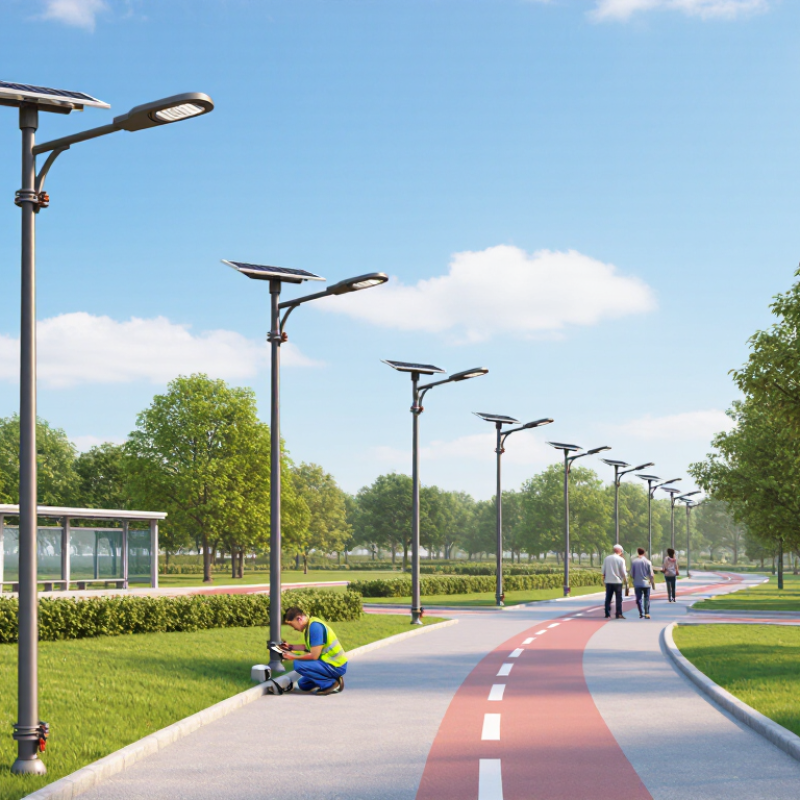
7 Best Ways to Prevent Solar Light Theft in Public Areas?

Map Theft Risk with CPTED and Municipal Asset-Loss Records

7 Best Ways to Prevent Solar Light Theft in Public Areas?

A reliable prevention plan starts with evidence, not guesses. Review municipal asset-loss records from the past two or three years. Mark each theft, attempted removal, repair, and replacement on a public-area map. Add time, location, light type, mounting method, nearby visibility, and estimated loss. Patterns often appear near dark pathways, isolated parking edges, or poorly maintained landscaping. In field audits, CPTED principles help explain these patterns. Natural surveillance improves when lights remain visible from roads, buildings, and regular pedestrian routes. Territorial cues, controlled access, secure anchoring, and prompt maintenance can also reduce opportunity. No map is perfect. Records may contain missing dates or inconsistent descriptions.

Tips: Use one shared incident form. Photograph the mounting point after each loss. Compare theft locations with broken fences, overgrown shrubs, and inactive areas. Test lighting coverage at night, not only on paper. Select tamper-resistant fasteners and concealed mounting hardware where appropriate. Place units where service crews can inspect them easily, but avoid isolated positions. Small design changes matter.

Public works teams should update the risk map quarterly. A simple red, amber, and green scale can guide limited budgets. Red zones may need stronger anchoring, improved sightlines, scheduled inspections, and nearby activity. Amber zones require monitoring. Green zones still need routine checks. Asset-loss records should measure more than replacement cost. Include staff time, public disruption, repeat failures, and delayed repairs. That wider record supports better funding decisions and exposes weak assumptions. Sometimes the cheapest location becomes expensive later. Review it again.

Specify IP66 Enclosures Under IEC 60529 for Outdoor Protection

Solar light theft in public areas often begins with weak access points. An IP66 enclosure, specified under IEC 60529, provides a strong foundation for outdoor protection. It is dust-tight and resists powerful water jets from any direction. However, IP66 does not mean safe for continuous immersion. The enclosure should protect batteries, controllers, and wiring from rain, dust, and deliberate tampering. A damaged seal can quietly defeat the rating.

Use tamper-resistant fasteners and mount the enclosure inside a reinforced metal frame. Secure poles to deep concrete foundations, and route cables through protected underground conduit. Keep battery compartments away from easy hand access. Good visibility also matters. Place lights where nearby residents, cameras, or facility staff can observe them. In field inspections, poorly positioned equipment is often easier to remove than expected. That detail deserves more attention.

Tips: Verify IEC 60529 test documentation before installation. Check the gasket after every service visit. Inspect cable glands, hinges, and fasteners for gaps or forced entry marks. Do not drill new holes without restoring the enclosure’s sealing performance. Clean dust from vents and panels, but avoid damaging the seal. Record each inspection with photographs and dates. A high IP rating helps, but it cannot replace strong anchoring, controlled access, and regular maintenance.

Use IK10 Housings with IEC’s 20-Joule Impact Rating

Preventing solar light theft in public areas starts with the enclosure. Choose an IK10 housing tested under IEC 62262 for a 20-joule impact. This rating indicates strong resistance against repeated blows from tools or vandalism. It does not make the fixture theft-proof. That distinction matters.

Use tamper-resistant fasteners and mount the light on a reinforced pole or bracket. Secure the base with properly sized anchors, then conceal cables inside the pole. Keep batteries and controllers inside the locked housing. Place fixtures where nearby lighting, cameras, or regular foot traffic increase visibility. Avoid low mounting points that provide easy access.

Field inspections often reveal a simple weakness: a strong housing attached with poor hardware. Check bolts, seams, hinges, and pole joints during scheduled maintenance. Look for fresh scratches, loosened screws, cracked lenses, or unusual movement. Record serial details and installation photographs for reliable asset tracking. Marking equipment can support identification, though markings alone rarely deter determined theft.

IK10 protection works best as part of a layered design. Consider anti-climb pole features, concealed access panels, and protected charging components. Confirm that the selected enclosure suits rain, dust, temperature changes, and coastal exposure. A higher impact rating may increase cost and weight. That trade-off deserves review before installation, because overbuilt equipment can create mounting problems. Test the complete assembly, not only the housing.

Secure Batteries with Locking Cages, Tamper Bolts, and Armored Cables

Public solar lights need more than bright illumination; their batteries require physical protection. A locking steel cage can cover the battery box and restrict access with an authorized service key. Use tamper-resistant bolts on doors, brackets, and panel mounts. Standard screws are easy to remove with common tools. An armored cable should connect the battery enclosure to the pole or foundation. Cut-resistant sheathing adds another obstacle without blocking maintenance.

Placement also matters. Install the battery compartment above easy reach, while keeping it accessible for trained technicians. Reinforce weak pole sections and use concealed cable routes where practical. Mark each battery housing with a property identifier and inspection date. Clear lighting around the pole improves visibility for nearby staff and residents. Motion-triggered monitoring can reveal unusual access, but it should support, not replace, regular inspections.

During site visits, check for scratched bolts, bent cage bars, loose anchors, and fresh tool marks. I have found that a strong cage can still fail when its mounting plate is thin. That detail is easy to miss. Keep a service log with photographs, battery serial details, and repair dates. Review the design after each incident or near miss. Small changes, such as replacing exposed cable loops, can prevent repeated losses. Consult qualified installers and follow local safety and electrical requirements.

7 Best Ways to Prevent Solar Light Theft in Public Areas? - Secure Batteries with Locking Cages, Tamper Bolts, and Armored Cables

No. Security Measure Primary Asset Protected Recommended Construction or Method Security Benefit Maintenance Considerations Best Use Case
1 Battery Locking Cage Rechargeable battery and controller Use a welded steel or aluminum enclosure with a hinged access panel, protected ventilation openings, and a shrouded lock area. Creates a physical barrier around the highest-value removable components and makes cutting or forced entry more difficult. Check hinges, welds, corrosion, drainage, and ventilation during scheduled inspections. Ground-mounted lights in parks, pathways, transit areas, and open plazas.
2 Tamper-Resistant Bolts Solar panel, luminaire, battery compartment, and mounting brackets Install security-head fasteners, such as pin-hex, one-way, or breakaway bolts, and keep specialized tools under authorized control. Reduces removal with common hand tools and slows opportunistic theft. Inspect for missing, loosened, or damaged fasteners and retighten them using the correct torque procedure. Installations where panels or service covers are accessible from the ground.
3 Armored Cable Protection Wiring between the solar panel, battery, controller, and light head Route cables through metallic conduit, flexible armored sleeving, or enclosed internal channels; secure entry points with cable glands. Helps prevent cable cutting, pulling, and weather-related damage while concealing wiring paths. Check for abrasion, exposed conductors, loose glands, water ingress, and corrosion. Sites with exposed cables, vandalism risk, or frequent public contact.
4 Reinforced Pole and Foundation Complete light assembly and support structure Use a robust pole base, concealed anchor hardware, anti-rotation features, and a foundation designed for the local soil and wind conditions. Makes it harder to remove, topple, or rotate the entire unit. Inspect the base for cracks, settlement, loose anchors, impact damage, and water accumulation. High-traffic public locations and areas exposed to vehicle impact or attempted removal.
5 Concealed or Elevated Components Battery, controller, connectors, and service ports Place removable components inside the pole, above normal reach, or within a locked service compartment while preserving safe access for technicians. Reduces visibility and direct access to parts that can be removed quickly. Confirm that access covers remain secure and that heat dissipation, drainage, and service clearance are maintained. Locations where equipment can be positioned out of casual reach without compromising servicing.
6 Asset Identification and Tracking Panels, batteries, controllers, and light assemblies Apply permanent identification numbers, tamper-evident labels, ownership markings, and an inventory record; add location monitoring where appropriate. Improves traceability, supports recovery, and makes resale of identifiable equipment more difficult. Update records after replacement, verify labels during inspections, and protect tracking devices from easy removal. Large installations managed across multiple parks, roads, campuses, or municipal zones.
7 Routine Inspection and Community Reporting Entire solar lighting system Use a documented inspection schedule, record missing parts or tampering, provide a public reporting channel, and repair vulnerabilities promptly. Shortens the time between damage or attempted theft and corrective action. Review inspection records, prioritize repeated incidents, and revise physical controls when patterns emerge. Public areas with frequent pedestrian activity, vandalism reports, or dispersed equipment.

Note: Security measures should be selected according to local environmental conditions, accessibility requirements, electrical safety rules, and applicable building or public-infrastructure standards.

Deploy GPS, LoRaWAN, and Tamper Alerts for Rapid Detection

7 Best Ways to Prevent Solar Light Theft in Public Areas?

Public solar lights need more than strong bolts. GPS tracking can record each unit’s location and trigger a geofence alert when it moves unexpectedly. During field inspections, teams often find that GPS performs poorly beneath dense trees or beside tall buildings. Install the antenna with a clear sky view, and test its position before closing the housing.

LoRaWAN can connect many lights across parks, pathways, and parking areas while using little power. Each light can report its status, battery level, and last communication time. A missing signal does not always mean theft; damaged gateways and weak coverage can cause similar gaps. Tamper alerts add another layer by detecting opened covers, sudden tilting, cable cuts, or unusual vibration. Send alerts to a staffed dashboard, not only to one mobile phone. Fast review matters.

Tips: Combine GPS with LoRaWAN rather than relying on one system. Photograph every installation, including bolt positions and cable routes. Use sealed enclosures and hidden fasteners, but leave approved access for maintenance. Set different alert thresholds for construction zones and public events. Review false alarms monthly. They reveal design weaknesses. Test the system after heavy rain, battery replacement, and firmware updates. A sensor that works in a workshop may fail beside a wet roadside.

7 Best Ways to Prevent Solar Light Theft in Public Areas

Deploying GPS tracking, LoRaWAN connectivity, geofencing, reinforced mounting, tamper switches, CCTV coverage, and scheduled inspections can reduce the time needed to detect and locate stolen solar lights.

The chart compares typical detection-time targets for common public-area security measures. Active tamper alerts and connected tracking provide the fastest notification, while periodic inspection may delay detection until the next maintenance visit.

FAQS

How can public teams identify areas with a higher solar light theft risk?

Review two or three years of loss records. Map thefts, attempted removals, repairs, and replacements. Dark paths and isolated parking edges deserve close attention. The pattern may be incomplete.

What details should each incident record include?

Record the date, location, light type, mounting method, visibility, and estimated loss. Include staff time, public disruption, repeat failures, and delayed repairs. Photograph the mounting point after every loss.

How does CPTED support solar light protection?

CPTED encourages natural surveillance, visible boundaries, controlled access, and prompt maintenance. Place lights where roads, buildings, cameras, or regular pedestrians can see them. Visibility matters.

Where should solar lights be installed?

Avoid isolated positions and low mounting points. Choose locations that service crews can inspect easily. Keep nearby shrubs trimmed and maintain clear sightlines. A convenient location can still become an expensive mistake.

What enclosure protection is suitable outdoors?

An IP66 enclosure resists dust and powerful water jets from different directions. It can protect batteries, controllers, and wiring from rain and dust. It does not protect equipment during continuous immersion. A damaged gasket changes everything.

How can teams strengthen the physical installation?

Use tamper-resistant fasteners, reinforced frames, and deep concrete foundations. Route cables through protected underground conduit or inside the pole. Keep batteries and controllers inside locked compartments. Weak hardware defeats strong housing.

What does IK10 protection add?

IK10 indicates resistance to impacts up to 20 joules under the relevant impact-testing method. It helps against repeated blows and vandalism. It does not make a fixture theft-proof. That distinction matters.

How often should public teams inspect and update protection plans?

Update the risk map quarterly and inspect equipment during scheduled maintenance. Check bolts, seams, hinges, cable glands, seals, and pole joints. Look for scratches, loose screws, cracked lenses, or unusual movement. Night testing is essential.

How should limited budgets guide prevention work?

Use red, amber, and green risk zones. Red areas may need stronger anchors, better sightlines, nearby activity, and frequent inspections. Amber areas need monitoring. Green areas still need routine checks. The cheapest location may cost more later.

Conclusion

Preventing solar light theft in public areas requires a combination of risk assessment, physical protection, and rapid detection. The process begins by mapping vulnerable locations through Crime Prevention Through Environmental Design (CPTED) principles and municipal asset-loss records. Outdoor equipment should use IP66-rated enclosures under IEC 60529 to resist dust and powerful water jets, while IK10 housings provide protection against high-impact damage based on the applicable 20-joule rating.

A strong security plan should also protect batteries and internal components with locking cages, tamper-resistant bolts, and armored cables. GPS tracking, LoRaWAN connectivity, and tamper alerts can help authorities identify movement or unauthorized access quickly, reducing replacement time and maintenance costs. Together, these measures explain how to prevent solar light theft in public areas through layered protection, careful site planning, durable construction, and timely response. Regular inspections and updated risk records further improve long-term security and ensure that public lighting remains reliable.

Ethan

Ethan

Ethan is a seasoned marketing professional with a deep expertise in our company's innovative product line. With a passion for sharing knowledge and insights, he takes the lead in regularly updating our corporate blog, where he explores industry trends, product features, and effective marketing......