7 Easy Tips to Fix Solar Lights That Stop Working

Time:2026-05-01 Author:Henry
0%

Solar lights are a wonderful addition to any outdoor setting, providing illumination without the need for electricity. However, they can sometimes stop working, leaving users frustrated and searching for answers. Knowing how to fix solar lights that stop working can save you time and money, allowing you to enjoy their benefits again.

First, it's essential to understand that solar lights rely on the sun's energy to function. If they aren’t charging properly, they may not turn on at night. After examining the solar panel for dirt or obstructions, you might find that cleaning it improves performance. Moreover, battery issues often contribute to failure, particularly if they are old or damaged. Replacing these batteries can be a straightforward solution that many overlook.

Another potential issue lies in the wiring, which can become damaged over time. A visual inspection might reveal frayed connections or corrosion. These problems may require more technical knowledge to resolve correctly. With a bit of patience and careful troubleshooting, you can restore your solar lights to their shining glory. Remember, inconsistencies in performance may hint at underlying issues, urging you to reflect on your existing maintenance practices.
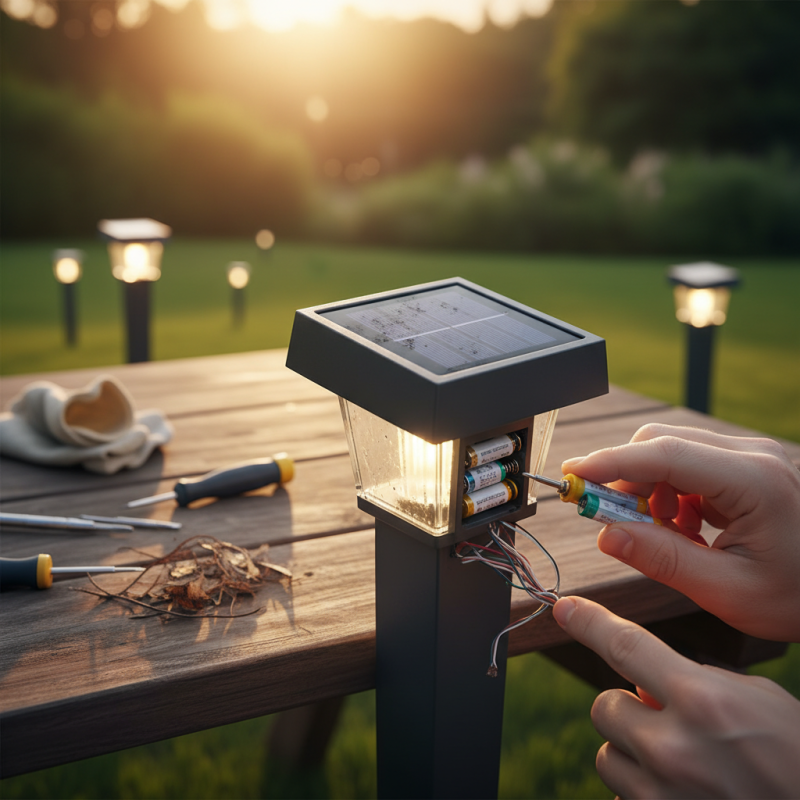
7 Easy Tips to Fix Solar Lights That Stop Working

Identifying Common Issues with Solar Lights That Stop Working

Solar lights are a great addition to any outdoor space. However, they can sometimes stop working. Identifying the issues can be frustrating, but it doesn't have to be.

One common problem is a dirty solar panel. Dust and debris can block sunlight. Clean the panel regularly with a soft cloth. Keep an eye on it, especially after windy days. A simple wipe can restore functionality.

Another issue is battery degradation. Over time, batteries lose their ability to hold a charge. You might notice dim lighting or flickering. Replace the batteries if they don’t hold a charge. Make sure to use the correct battery type for your light.

Wiring can also be a hidden culprit. Check for loose or damaged wires. Sometimes, squirrels or weather can cause damage. If you find any issues, consider contacting a professional. They can help diagnose more complex problems.

In summary, caring for your solar lights is essential. Regular maintenance can prevent many issues. Keep an eye on their performance to ensure they shine brightly.

Checking and Replacing the Solar Batteries in Your Lights

Solar lights are popular for their energy-efficient benefits. However, they can stop working due to battery issues. Checking and replacing the solar batteries is essential for restoration. According to industry research, battery failure accounts for approximately 60% of solar light malfunctions. Understanding this can help users manage expectations.

Most solar lights use rechargeable batteries like NiMH or Li-ion. These batteries typically last 2 to 3 years, but environmental factors can shorten their lifespan. For instance, extreme temperatures can degrade battery performance. It’s recommended to inspect these batteries regularly. If batteries show signs of swelling or corrosion, replacement is necessary.

Replacing the batteries is straightforward. Open the light casing, remove the old battery and insert the new one. Ensure proper alignment according to the manufacturer’s specifications. Remember that poor-quality replacements can lead to future problems. A common oversight is not fully charging new batteries before use, which may affect their longevity. Regular maintenance checks can prevent unexpected failures.

7 Easy Tips to Fix Solar Lights That Stop Working

Tip Number Tip Description Important Note
1 Check for dirt or obstructions on solar panels. Clean with a soft cloth to ensure proper sunlight absorption.
2 Inspect solar batteries for corrosion or damage. Replace corroded batteries to restore functionality.
3 Ensure that the solar light is positioned in direct sunlight. Adjust the placement if necessary for optimal exposure.
4 Check the LED bulbs for burn-out or failure. Replace defective bulbs to restore light function.
5 Test the lights with a different solar battery. This can help identify battery issues.
6 Examine the wiring for damage or loose connections. Repair any visible wiring issues to ensure proper function.
7 Consider replacing the entire solar light fixture if all else fails. Sometimes, older units are beyond repair.

Cleaning the Solar Panel for Optimal Performance

Solar lights are a great way to illuminate your outdoor areas. However, one common issue is reduced performance due to dirty solar panels. Over time, dust, dirt, and grime can accumulate on the surface, blocking sunlight. This impairs the battery's ability to charge fully, leading to dim or non-functional lights. Cleaning the solar panel can dramatically improve their effectiveness.

To clean your solar panel, start by checking its condition. Use a soft cloth or sponge with warm soapy water. Gently scrub the surface to remove debris. Be cautious not to scratch the panel. Rinse with clean water to eliminate soap residue. Ensure the area around the panel is also free of leaves or obstacles that could cast shadows. Pay attention to this detail; sometimes, small changes make a big difference.

Feedback on this process is essential. Did you notice an improvement? If your lights still don't work after cleaning, consider checking the connections and batteries. Sometimes, deeper issues lurk beneath the surface. Reflecting on your maintenance routine can lead to better performance in the future. Regular cleaning might seem tedious, but it greatly enhances the longevity and efficiency of your solar lights.

Examining Wiring and Connections for Damage or Corrosion

When solar lights stop working, damaged wiring or corroded connections are often the culprits. Regularly inspect these areas for signs of wear. Look closely at the wiring insulation. If it appears frayed or cracked, it could lead to power loss. A small tear might not seem significant, yet it can interrupt the entire system's function.

Corrosion is another sneaky issue. It often develops where connections meet, especially if exposed to the elements. Green or white build-up around connectors is a red flag. Cleaning these areas is essential. Use a soft brush and isopropyl alcohol to clear the debris. Make sure everything is dry before reconnecting to avoid further issues.

On occasion, connections might feel loose even when they appear intact. Test them by gently tugging or wiggling. If they give too easily, it could lead to intermittent power. Secure these connections with electrical tape for a temporary fix. Consistent monitoring and minor repairs can ensure your solar lights shine bright for years.

Resetting Your Solar Light to Restore Functionality

Resetting your solar light is often a simple yet effective way to restore its functionality. To begin, locate the reset button. It is usually found on the back or underside of the unit. Press and hold this button for about ten seconds. This step can resolve many common issues by refreshing the device’s settings. After resetting, give the light a day to recharge fully under sunlight.

You might need to check the solar panel too. Dirt and debris can block sunlight. A clean solar panel ensures maximum light absorption. Use a soft cloth to wipe it down. Furthermore, examine the batteries. Over time, batteries can lose their ability to hold a charge. Consider replacing them if they appear corroded or old.

Sometimes, the issue could lie with the light bulb. LED lights can dim over time. If your solar light flickers or does not turn on, it may be time for a bulb replacement. Always choose quality components for best results. Regular maintenance helps keep your lights operational. Remember to inspect each element periodically, as neglect may lead to bigger problems.

FAQS

: What should I do if my solar lights aren't working?

: Check for a dirty solar panel. Clean it regularly with a soft cloth to improve performance.

Why are my solar lights flickering or dim?

This could indicate battery degradation. Replace the batteries if they don’t hold a charge.

How can I identify wiring issues?

Look for loose or damaged wires. Inspect the insulation for tears or cracks that might disrupt functionality.

What signs indicate corrosion in solar lights?

Look for green or white build-up around connections. This may indicate corrosion that needs cleaning.

How do I reset my solar light?

Locate the reset button, press and hold for ten seconds. This refreshes the settings and can restore functionality.

How can I ensure the solar panel collects enough sunlight?

Regularly inspect the panel for dirt or debris. A clean panel allows maximum light absorption for optimal charging.

What if connections feel loose?

Test them by tugging gently. Use electrical tape for a temporary fix if they seem to give too easily.

How often should I maintain my solar lights?

Regular inspections are crucial. Simple maintenance can prevent bigger issues and prolong the life of your lights.

Why might I need to replace the light bulb in my solar light?

LED bulbs can dim over time. If the light flickers or doesn't turn on, replacing the bulb might be necessary.

Is it necessary to monitor my solar lights regularly?

Yes, consistent monitoring can save you from dealing with bigger problems later on. Regular care is key.

Conclusion

If you're wondering how to fix solar lights that stop working, the first step is to identify common issues such as dirty panels or failing batteries. Checking and replacing the solar batteries is crucial, as depleted or damaged batteries are often the culprits behind malfunctioning lights. Additionally, cleaning the solar panel ensures optimal performance by allowing maximum sunlight absorption.

Inspecting wiring and connections for any signs of damage or corrosion is essential to maintain electrical integrity. Finally, resetting your solar light can often restore its functionality. By following these straightforward tips, you can efficiently troubleshoot and resolve issues with your solar lights, allowing them to shine brightly once again.

Henry

Henry

Henry is a dedicated marketing professional with a profound expertise in the company's offerings. With years of experience in the industry, he possesses an impressive understanding of the market dynamics and consumer behaviors that drive success. Henry is committed to sharing his insights through......