As solar energy becomes an essential part of sustainable living, learning how to make solar lights brighter is increasingly important. A report from the National Renewable Energy Laboratory indicates that the efficiency of solar panels has improved by over 20% in recent years. This progress opens up new possibilities for enhancing outdoor illumination. Solar lights, primarily powered by these advanced panels, can be both cost-effective and environmentally friendly.
However, many users still face challenges with dim lighting. The quality of LED bulbs, battery capacity, and panel positioning significantly impact brightness. According to a survey of solar light users, nearly 40% expressed dissatisfaction with light output. This reveals a need for effective strategies to maximize brightness without compromising solar efficiency. By exploring practical tips, individuals can unlock the potential of their solar lights and transform outdoor spaces with ease. We can collectively strive for innovation in energy-efficient solutions, ensuring a bright future for our homes and the planet.
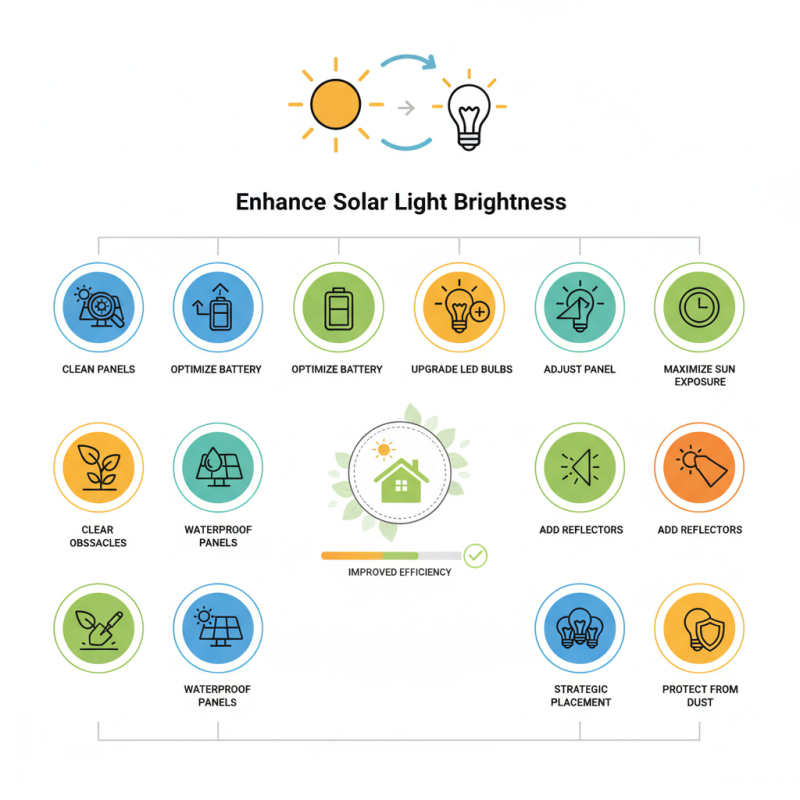
To enhance the brightness of solar lights, understanding their components is crucial. Solar lights consist of a solar panel, battery, LED bulb, and a controller. The solar panel converts sunlight into energy, which charges the battery. A higher quality panel can absorb more sunlight, leading to better performance. Investing time in selecting the right solar panel is essential for brighter outcomes.
The battery's capacity directly affects how long the light lasts. Often, manufacturers use standard batteries that may not provide optimal energy during cloudy days. Upgrading to a higher capacity battery can significantly improve brightness and duration. The LED bulb itself plays a critical role; not all LED bulbs offer the same brightness levels. Bulbs with a higher lumen rating will emit more light, making them preferable for outdoor environments.
Additionally, the controller determines how energy is utilized. It regulates the energy flow from the battery to the LED. Some controllers allow for better energy conservation, impacting brightness levels during the night. Common mistakes include overlooking these components or using low-quality versions. Reflecting on these details can help users make more informed choices for their solar lighting needs.
When placing solar lights, consider the sun's path. Positioning them where they receive maximum sunlight enhances their brightness. An ideal location is a south-facing area. This direction captures more sunlight throughout the day. Avoid obstacles like trees or tall buildings that create shade. Even a few hours of reduced sunlight can affect performance.
Check the angle of your solar lights. Adjusting their tilt can significantly impact sun exposure. A more upright position may catch sunlight better, especially in the morning or late afternoon. Experiment with different placements until you find the best spot. Sometimes, a simple move a few feet can make all the difference.
Reflect on your current setup. Are your solar lights underperforming? It might be due to inadequate sunlight. Don't hesitate to try various locations. Each change can yield surprising results. Sometimes, learning what doesn’t work is just as valuable as finding the ideal spot. Taking the time to evaluate placement will lead to better lighting and enhance your outdoor experience.
| Tip Number | Tip Description | Impact on Brightness | Optimal Positioning |
|---|---|---|---|
| 1 | Clean the solar panel regularly | Increases sunlight absorption | Face south for maximum exposure |
| 2 | Adjust the angle of the panel | Enhances efficiency in low sun | Tilt towards the sun |
| 3 | Reduce shade obstructions | Maximizes light exposure | Move away from trees or buildings |
| 4 | Install in an open area | Improves overall brightness | Avoid enclosed spaces |
| 5 | Use higher wattage LEDs | Directly increases light output | Ensure compatibility with solar unit |
| 6 | Check the battery health | Enhances overall performance | Replace old batteries as needed |
| 7 | Use reflective surfaces | Increases light dispersion | Place lights near white walls |
| 8 | Select sunny locations | Maximizes daily charging | Avoid spots with heavy cloud cover |
| 9 | Monitor battery charging times | Ensures sufficient light output | Charge during peak sunlight |
| 10 | Use motion sensors | Enhances brightness when needed | Ideal for paths and entryways |
To enhance the brightness of solar lights, cleaning the solar panels is crucial. Dust, dirt, and grime can significantly reduce their efficiency. Regular maintenance helps maximize sunlight absorption and ensures optimal performance. A clean panel can increase energy output by up to 20%. It's a simple yet effective step in keeping solar lights functional.
Use a soft cloth or sponge to wipe the panels. Avoid abrasive materials that could scratch the surface. A mixture of mild soap and water works well for tough stains. Rinse thoroughly to remove any residue. Cleaning should be done every few months to maintain effectiveness.
Sometimes, people overlook this vital process. They assume solar panels can function well without care. This misconception can lead to dim lights and frustration. Regular monitoring and maintenance can prevent this. A little effort goes a long way in ensuring bright, reliable outdoor lighting.
Using reflective surfaces can significantly enhance the brightness of solar lights. This method is not only effective but also resourceful. Reflective materials, such as mirrors or aluminum foil, redirect and amplify the available light. In fact, studies show that reflective surfaces can increase light output by up to 50%, making them a useful addition to outdoor lighting solutions.
Consider your environment. Placing solar lights near reflective surfaces maximizes their potential. For example, positioning lights near patios or walkways can create a warmer ambiance. A well-placed reflective surface can double the effectiveness of your solar lights. However, it’s essential to experiment with angles and distances. Not all setups will yield ideal results at first.
However, relying solely on reflective surfaces may have limitations. Too much reflection can cause glare, making areas uncomfortable. It can also distort how colors appear at night. Understanding these nuances is crucial when enhancing your solar lighting. It's helpful to collect feedback from your experiences. Embrace trial and error to find the right balance for your outdoor space.
When it comes to solar lights, upgrading the battery capacity is crucial. Many solar lights rely on standard batteries, with a capacity of around 1200mAh to 1800mAh. A higher capacity battery, such as a 3000mAh lithium-ion option, can significantly enhance brightness. Reports show that lights with upgraded batteries can offer 40% more brightness on average.
Incorporating larger, more efficient batteries leads to sustained performance. These batteries can store more energy during the day. As a result, they can power the lights for longer periods at night. Some solar lights struggle to stay illuminated for more than 6 hours. However, with proper upgrades, they can last up to 12 hours or more. This improvement also reduces the frequency of battery replacements, increasing eco-friendliness.
Despite these benefits, users must consider the compatibility of battery upgrades. Not every solar fixture is designed to handle higher capacity batteries. Overloading the system can cause damage or shortened lifespan of the lights. Testing different capacities gradually allows for better insight into performance improvements. Balancing brightness and safety is essential for optimal results.
: Solar lights consist of a solar panel, battery, LED bulb, and a controller.
A higher quality solar panel absorbs more sunlight, improving light performance significantly.
The battery's capacity governs how long the lights last, crucial for efficiency.
Upgrading to a higher capacity battery enhances both brightness and duration on cloudy days.
LED bulbs with a higher lumen rating emit more light, ideal for outdoor settings.
The controller regulates energy flow from the battery to the LED, affecting brightness levels.
Yes, reflective surfaces can amplify light output by up to 50%, enhancing overall brightness.
Positioning lights near reflective surfaces, like patios, can maximize their potential and ambiance.
Excessive reflection may cause glare and distort colors, making areas uncomfortable.
Experiment with angles and distances, and gather feedback to adjust your setup effectively.
This article titled "10 Tips to Make Solar Lights Brighter Instantly" explores effective strategies for enhancing the brightness of solar lights. It begins by emphasizing the importance of understanding the components that influence brightness, allowing users to make informed upgrades. The positioning of solar lights is also critical; placing them in areas with optimal sun exposure can significantly boost their performance.
Moreover, the article highlights cleaning techniques to maintain solar panel efficiency, ensuring that dirt and debris do not hinder absorption of sunlight. Using reflective surfaces around the solar lights can amplify light output, creating a more luminous environment. Finally, upgrading the battery capacity is suggested as a means to ensure sustained brightness performance. For anyone wondering how to make solar lights brighter, these practical tips provide a comprehensive guide to achieving enhanced illumination.

Sanitize Light